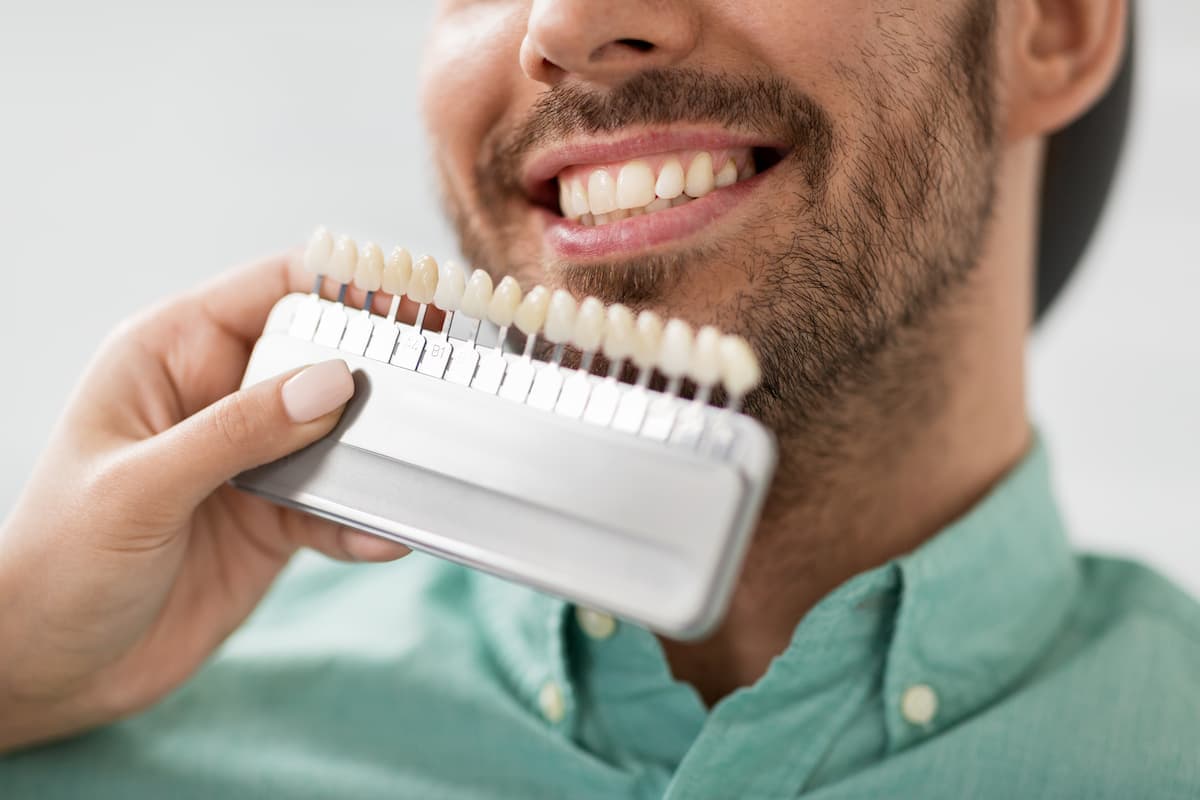
Can Porcelain Veneers Repair Chipped Front Teeth For Patients?
A chipped front tooth can feel unsettling, whether the damage is minor or more noticeable. Front teeth are highly visible, and even a small chip can affect how you feel about your smile — as well as raising questions about the strength and integrity of the tooth itself. Patients comparing options for veneers for chipped front teeth often start by understanding whether a veneer is clinically suitable in their case.
Porcelain veneers are sometimes discussed as a way to restore the appearance of a chipped front tooth. They can be a suitable option in certain circumstances, but they are not appropriate for every type of chip or every patient. Whether they are right for a particular tooth depends on a range of clinical factors that only a qualified dental professional can assess.
This article explains what porcelain veneers can realistically achieve, when they may be suitable for a chipped front tooth, when another approach might be more appropriate, and what else patients may wish to consider.
Can Porcelain Veneers Repair Chipped Front Teeth?
A porcelain veneer is a thin shell of dental ceramic that is bonded to the front-facing surface of a tooth. It is designed to improve the appearance of a tooth — and in some cases, to restore an element of structure — by covering imperfections on the visible surface.
For a chipped front tooth, a well-placed veneer may effectively conceal the chip and restore a more even, natural-looking tooth shape. However, it is important to understand that a veneer covers the front surface of the tooth rather than rebuilding the entire tooth from within. This distinction matters clinically.
The extent of the chip plays a significant role in determining whether a veneer is appropriate. A minor or moderate cosmetic chip — one that has not compromised the deeper structural integrity of the tooth — may in some cases be well suited to a veneer. Where a chip is larger, deeper, or affects the structural strength of the tooth, other restorative approaches may be more suitable.
A veneer is a cosmetic and restorative covering, not a structural repair in the way that other treatments might be. Understanding this distinction helps set realistic expectations about what veneers can and cannot achieve for a chipped tooth.
When Might Veneers Be Suitable For A Chipped Front Tooth?
Several factors may support the suitability of a porcelain veneer for a chipped front tooth, although no single factor is automatically decisive. A thorough dental assessment is always required.
Small or Moderate Cosmetic Chips
Where a chip is relatively minor or moderate in size and the damage is largely cosmetic — meaning the tooth's underlying structure and strength are not significantly compromised — a porcelain veneer may sometimes be considered as a restorative option. These types of chips tend to affect the outer enamel layer rather than the deeper dentine or pulp.
Adequate Healthy Tooth Structure
A veneer requires sufficient healthy tooth structure to bond to effectively. Where most of the original tooth remains intact and healthy, there is generally a better foundation for a veneer to be placed. Where significant tooth structure has been lost — through the chip itself, decay, or previous restorations — suitability may be reduced.
Stable Oral Health
Good overall oral health is an important consideration. If there is active decay, gum disease, or other dental concerns present, these would generally need to be addressed before any restorative treatment is considered. A stable oral environment can support the longevity of any restoration.
Suitable Bite Forces
The way a patient's upper and lower teeth meet — known as occlusion — can affect the suitability and durability of a veneer. Where bite forces are well distributed and balanced, a veneer may be better supported. This is assessed during a clinical examination.
It is worth noting that even where these factors seem favourable, suitability can only be confirmed through a proper dental assessment. Meeting one or more of these criteria does not automatically indicate that a veneer is the right treatment choice.
When Might Porcelain Veneers Not Be The Best Option?
There are circumstances in which a porcelain veneer may not be the most appropriate choice for a chipped front tooth.
Where the chip has caused more substantial structural damage — for example, if a significant portion of the tooth has been lost or if there is a deeper fracture — a veneer alone may not provide adequate restoration. In these situations, a more comprehensive restorative approach may be needed.
Teeth affected by significant decay, large existing restorations, or weakened enamel may not provide sufficient surface area or strength for a veneer to bond reliably. Similarly, where a tooth has suffered deeper trauma — extending into the dentine or closer to the pulp — the clinical needs of the tooth may go beyond what a veneer is designed to address.
Patients who grind or clench their teeth — a condition known as bruxism — may place excessive forces on restorations. This can affect the suitability and longevity of veneers, and it would typically need to be assessed and discussed carefully before any treatment is planned.
Poor oral health, including untreated gum disease or decay elsewhere in the mouth, is generally a contraindication for elective restorative work until those concerns have been managed.
Where any of these factors are present, a dentist may recommend a different restorative option — or may advise that the overall condition of the tooth needs to be stabilised first.
Porcelain Veneers vs Composite Bonding For Chipped Front Teeth
For patients with a chipped front tooth, two of the most commonly discussed options are porcelain veneers and composite bonding. Both can address cosmetic concerns, but they differ in a number of clinically relevant ways.
Composite bonding involves applying a tooth-coloured resin material directly to the tooth surface, shaping it by hand, and hardening it with a curing light. It is generally a more conservative option, as it often requires little or no removal of natural tooth structure. It can be completed in a single appointment and is repairable if it chips or wears. However, composite resin is generally less resistant to staining and wear than porcelain over time, and may require more frequent maintenance or replacement.
Porcelain veneers are made from a stronger and more stain-resistant ceramic material, and tend to offer a highly natural, aesthetic result. However, placing a veneer typically involves some removal of tooth enamel to create space for the shell — a process that is irreversible. Veneers are laboratory-fabricated and generally require at least two appointments. They are not as easily repaired as composite if damaged, though they can often be replaced.
Neither option is universally superior. The most appropriate choice depends on the size of the chip, the condition of the tooth, aesthetic priorities, the patient's oral habits, and the clinical judgement of the treating dentist. For a minor chip, composite bonding may offer an equally effective and more conservative solution. For a more significant cosmetic concern where durability and aesthetic precision are key priorities, a porcelain veneer may sometimes be preferred — where the tooth is clinically suitable.
Discussing both options with a dentist during a consultation allows for an informed decision to be made based on individual circumstances.
Can A Veneer Fix A Large Chip?
The larger the chip, the more complex the clinical picture becomes. A significant chip may have removed a substantial amount of tooth structure, altered the tooth's shape considerably, or — in some cases — extended into the dentine or closer to the nerve of the tooth.
Where the chip is large but the remaining tooth structure is still sufficient and structurally sound, a veneer may still be possible in some cases, depending on clinical assessment. However, where significant structure has been lost, the tooth may not have enough surface area or strength to support a veneer reliably.
In situations involving a large chip with considerable structural damage, a dental crown — which covers the entire tooth rather than just the front surface — may sometimes be more appropriate. A crown provides more comprehensive coverage and can restore both the appearance and the structural integrity of a significantly damaged tooth.
The key consideration with a large chip is not simply aesthetic. The structural health of the tooth must be assessed carefully before deciding on any restorative approach. A dentist may also need to assess whether the pulp of the tooth has been affected, which could influence the treatment plan considerably.
What Happens Before A Chipped Tooth Is Restored?
Before any restoration is planned, a thorough dental assessment is carried out. This is an important step that helps ensure the chosen treatment is appropriate for the individual tooth and the patient's overall oral health.
During an assessment, a dentist will typically examine the chipped tooth closely to evaluate the size, depth, and position of the chip. X-rays may be taken to assess the internal structure of the tooth and the surrounding bone. The bite — how the upper and lower teeth meet — will also be assessed, as this has a direct bearing on which restorations may be suitable and how well they are likely to perform.
The overall condition of the mouth is reviewed, including the health of the gums, the presence of any decay, and the state of existing restorations. Any habits that might affect the longevity of a restoration — such as grinding or clenching — will be discussed.
Aesthetic considerations are also explored. Patients are encouraged to share what they hope to achieve, and the dentist will advise on which options may realistically meet those expectations given the clinical situation.
The assessment stage is also the appropriate time to discuss the full range of options — including porcelain veneers, composite bonding, and other restorative approaches — so that patients can make a well-informed decision.
Are Porcelain Veneers Permanent?
Porcelain veneers are considered a long-term restoration, but they are not permanent in the sense that they will last indefinitely without change. Like all dental restorations, veneers can be subject to wear, damage, and the need for eventual replacement.
Where tooth preparation is required — involving the removal of a thin layer of enamel — this aspect is irreversible. The tooth will always require a restoration of some kind following preparation. This is one of the reasons why the decision to place a veneer should be made thoughtfully and with a full understanding of the implications.
How long a veneer remains in good condition depends on a range of individual factors, including oral hygiene, dietary habits, bite forces, any grinding or clenching, and how well the restoration is maintained. Regular dental check-ups are important for monitoring the condition of a veneer over time.
Making unsupported claims about the precise lifespan of a veneer would not be appropriate, as outcomes vary considerably between individuals. What can be said is that good maintenance and regular professional care can support the longevity of any restoration.
What Can Cause A Veneer To Chip Or Fail?
Even a well-placed veneer can be affected by certain factors over time. Understanding these can help patients make informed decisions and take steps to protect their restoration.
Physical trauma — such as a fall, sports injury, or accidental blow to the mouth — can cause a veneer to crack or dislodge. Excessive bite forces, including those associated with teeth grinding (bruxism) or clenching, can place repeated stress on a veneer that may eventually affect its integrity.
Habits such as nail biting, chewing on pens, or using the front teeth to open packaging can all place unnecessary stress on restorations. These habits are worth addressing regardless of whether a veneer is in place.
Underlying changes to the tooth itself — such as new decay developing at the margins of the veneer, or changes to the surrounding gum tissue — can also affect how well a veneer performs and fits over time.
Regular dental examinations allow any early signs of wear or change around a veneer to be identified and managed before they become more significant problems.
What Are The Alternatives To Porcelain Veneers For Chipped Teeth?
Porcelain veneers are one of several options that may be considered for a chipped front tooth, depending on the clinical circumstances.
Composite bonding is often the most conservative option for smaller chips. Because it generally requires minimal or no removal of natural tooth structure, it may be particularly appropriate for younger patients or those who prefer a less invasive approach. It can also be adjusted or repaired relatively straightforwardly.
Dental crowns may be considered where the tooth has sustained more substantial damage that goes beyond what a veneer can address. A crown covers the entire tooth and can restore both function and appearance where greater structural support is needed. It is typically reserved for more complex situations rather than routine cosmetic chips.
Conservative monitoring may occasionally be appropriate for a very minor chip — particularly where there is no sensitivity, no risk of the chip worsening, and no significant cosmetic concern. In these cases, a dentist may recommend observing the tooth at regular check-ups without immediate intervention.
The appropriate option always depends on the individual tooth, its condition, the patient's oral health, and their personal priorities. There is no universally correct answer, which is why professional assessment is essential. For a side-by-side overview of material differences, some patients also review porcelain veneers vs composite veneers.
How Can Patients Protect A Restored Front Tooth?
Once a front tooth has been restored — whether with a veneer, composite bonding, or another restoration — taking steps to look after it can help extend the life of the treatment.
Maintaining a good oral hygiene routine is fundamental. Brushing twice daily with a fluoride toothpaste and cleaning between the teeth helps protect both the restoration and the surrounding gum tissue and tooth structure.
Attending regular dental check-ups allows a dentist to monitor the condition of the restoration, identify any early concerns, and carry out professional cleaning where needed.
Avoiding habits that place unnecessary stress on the front teeth — such as biting nails, chewing hard objects, or using teeth as tools — can help reduce the risk of damage to a restoration.
Where grinding or clenching is a concern, a dentist may recommend a custom-made night guard to protect the teeth during sleep. Addressing bruxism is important for the long-term health of any restoration on the front teeth.
Protecting the mouth during contact sports with an appropriate mouthguard can also help reduce the risk of trauma to restored teeth.
Frequently Asked Questions
Will a porcelain veneer completely hide a chipped front tooth?
A: In suitable cases, a well-placed porcelain veneer can restore the appearance of a chipped front tooth, covering the chip and creating a more even, natural tooth shape. However, the extent to which a veneer improves the appearance depends on the size of the chip, the position of the tooth, and the skill of the treating dentist. A consultation allows realistic expectations to be discussed.
Does getting a veneer mean the tooth has to be filed down?
A: In many cases, placing a porcelain veneer requires some preparation of the tooth's surface — a thin layer of enamel is typically removed to create space for the veneer. This is generally a small amount, but it does make the process irreversible. Your dentist will explain exactly what is involved before any treatment begins.
Can composite bonding fix a chipped front tooth just as well as a veneer?
A: For smaller or more minor chips, composite bonding can be a highly effective and more conservative alternative to a porcelain veneer. It may not match the durability or stain resistance of porcelain over a longer period, but for suitable cases it offers a reversible and repairable solution. The best option depends on the individual tooth and clinical assessment.
Is it safe to have a veneer if I grind my teeth?
A: Teeth grinding (bruxism) can place significant forces on restorations and may affect their longevity. It is an important factor to discuss with your dentist before any veneer treatment is planned. In some cases, bruxism may need to be managed — for example, with a night guard — before a veneer is considered appropriate, or it may influence which type of restoration is recommended.
What happens if a veneer chips or breaks?
A: If a veneer becomes chipped or damaged, the appropriate response depends on the extent of the damage. Minor chips may sometimes be smoothed or repaired with composite resin, while more significant damage may require the veneer to be replaced. It is important to contact your dentist promptly rather than leaving a damaged veneer unattended.
Can veneers be placed on a tooth that has already had a filling?
A: The presence of an existing filling does not automatically rule out a veneer, but it is a factor that must be assessed carefully. The size and position of the filling, and how much healthy tooth structure remains, can influence whether there is sufficient support for a veneer to be bonded reliably. Your dentist will assess this during the examination.
How soon after chipping a tooth should I seek dental advice?
A: It is generally advisable to contact a dentist promptly after chipping a tooth, even if the chip appears minor. A dentist can assess whether the inner structure of the tooth has been affected, check for any sensitivity or nerve involvement, and advise on the most appropriate management — whether that is immediate treatment or planned restoration.
Are porcelain veneers suitable for teenagers with chipped teeth?
A: Age and the development stage of the teeth are relevant considerations. For younger patients, particularly those whose teeth and jaws are still developing, a more conservative approach such as composite bonding may be preferred initially. The long-term nature of enamel preparation and the irreversibility of the process are particularly important considerations in younger patients. A dentist can advise on appropriate timing and options.
Can a veneer be placed on a front tooth that has had root canal treatment?
A: A tooth that has undergone root canal treatment may sometimes be restored with a veneer, but the overall condition of the tooth — including its remaining structure and strength — must be carefully assessed. In some cases, a crown may be considered more appropriate for a root-treated tooth, as it provides more comprehensive support. This is a decision that depends on individual clinical assessment.
What questions should I ask at a consultation about a chipped front tooth?
A: It can be helpful to ask about all the available options for your particular tooth, what the assessment involves, what preparation would be required for each treatment, how each option might perform over the longer term given your individual circumstances, and what happens if a restoration needs replacing in the future. A good consultation should allow you to understand your options clearly before making any decisions.
Dental Disclaimer
This article is for general educational purposes only. It is not a diagnosis and does not replace an examination by a qualified dentist. Suitability for veneers, bonding, crowns, or any other treatment must be confirmed through individual clinical assessment. Outcomes and longevity vary between patients and cannot be guaranteed. If you have concerns about a chipped tooth, seek advice from a GDC-registered dental professional.
Written Date: 24 August 2026 Next Review Date: 24 August 2027
Ready to Book an Appointment?
Our team is here to help you with all your dental and medical needs.








