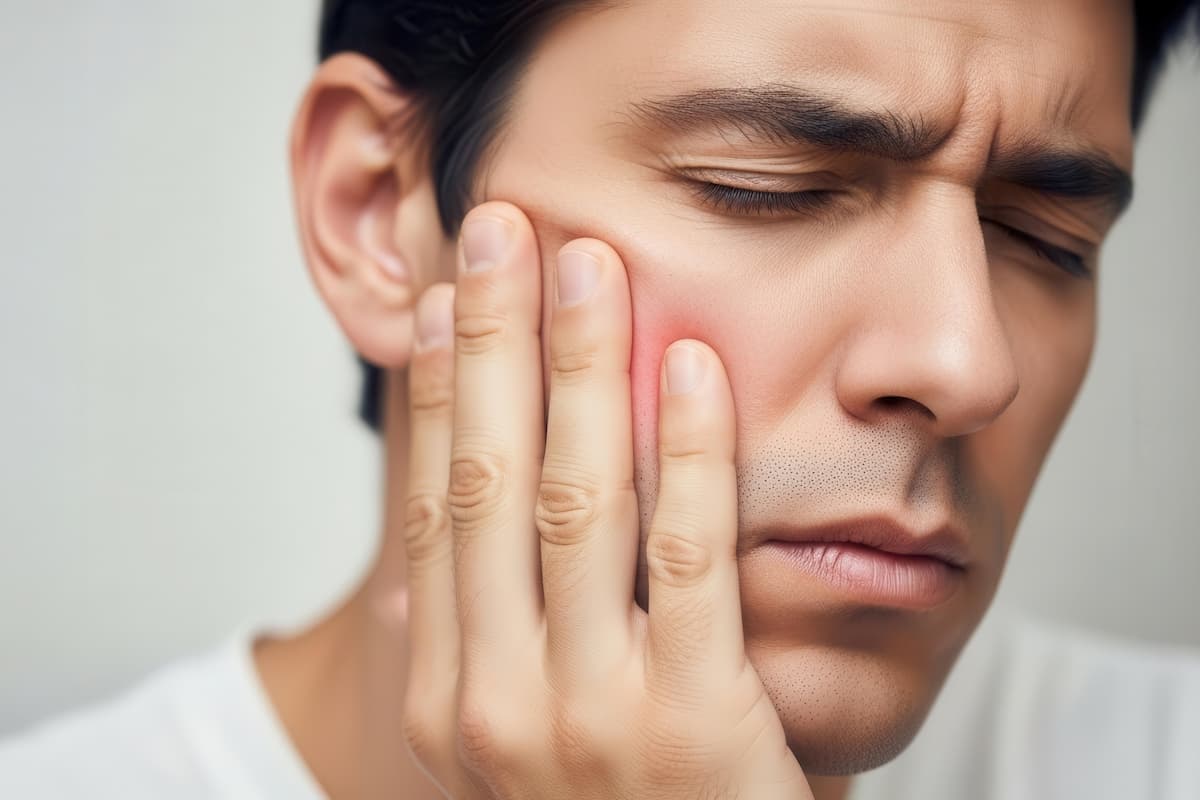
Severe Toothache At Night? Safe Steps To Minimise Pain Now
Few experiences are more distressing than being woken by severe tooth pain in the middle of the night. Dental practices are closed, the discomfort can feel overwhelming, and it is not always easy to know what to do next. You are not alone in this — toothache is one of the most common reasons people seek unplanned dental or emergency care in the UK.
This article is designed to help you understand what may be happening, what you can safely do to reduce discomfort, and — importantly — when your symptoms mean you should seek urgent or emergency help rather than waiting until morning.
What Should You Do For Severe Toothache At Night?
Direct answer: Rinse gently with warm water, avoid hot or cold foods, and keep your head elevated when resting. An appropriate over-the-counter pain reliever — taken according to the product instructions and only if suitable for you — may help reduce discomfort temporarily. These steps do not treat the underlying cause. If pain is severe, persistent, accompanied by swelling, fever, or difficulty swallowing or breathing, seek urgent dental or emergency medical attention.
Why Toothache Can Feel Worse at Night
If you have noticed that your tooth pain seems to intensify once you lie down, there is a physiological reason for this. When you are horizontal, blood pressure in the head and face increases slightly compared to when you are sitting or standing upright. This change in blood flow can heighten sensitivity and increase the throbbing or pulsing sensation associated with tooth pain.
There is also a psychological dimension. During the day, distractions from work, conversation and daily activity can reduce the perceived intensity of pain. At night, in the quiet and darkness, there is little to redirect your focus — so the pain can feel more prominent than it did during waking hours.
This does not necessarily mean your tooth has worsened overnight, though it is possible. It means that night-time conditions can make existing tooth pain harder to tolerate.
What Can Cause Significant Tooth Pain?
Severe tooth pain can be associated with several different dental conditions. A dental professional is the only person who can properly assess what is causing your pain, but understanding possible causes can help you describe your symptoms clearly when you seek care.
Tooth decay reaching the inner pulp — when decay progresses deep enough to affect the pulp (the soft tissue at the centre of a tooth containing nerves and blood vessels), it can cause significant, sometimes spontaneous pain that may be difficult to localise.
Dental abscess — a collection of infection, often caused by bacteria entering through decay or a crack, can produce severe, throbbing pain. A dental abscess may also cause swelling, a bad taste in the mouth, or a feeling of pressure. An abscess requires professional treatment and should not be left unassessed.
Cracked or fractured tooth — a crack in a tooth may not always be visible and can cause sharp pain when biting, or sensitivity that lingers. Depending on the depth of the crack, symptoms can vary considerably.
Gum disease — in some cases, particularly if infection is present in the gum tissue around a tooth, significant discomfort may occur at night.
Dental trauma — an injury to a tooth — even one that occurred days or weeks previously — can sometimes cause delayed pain as the pulp responds to the impact.
Exposed dentine or tooth sensitivity — while usually associated with milder discomfort, in some cases this can cause significant pain, particularly in response to temperature changes.
Understanding that these conditions require professional assessment — not just pain relief — is an important part of managing toothache safely.
Safe Steps to Reduce Discomfort at Night
These measures are intended to provide temporary comfort while you arrange dental care. They do not treat the underlying cause of your pain.
Keep Your Head Elevated
Lying flat can worsen the throbbing sensation. Propping yourself up with an extra pillow may help reduce the blood pressure effect on the affected area and make resting slightly more comfortable.
Rinse Gently With Warm Salt Water
A gentle warm salt water rinse may help to soothe inflamed gum tissue and keep the area clean. Use approximately half a teaspoon of table salt dissolved in a glass of warm water. Rinse gently — do not swish forcefully — and spit. This is a simple measure that may offer some comfort, though it is not a treatment.
Apply a Cold Compress
A cold compress applied to the outside of the cheek for short intervals (around 15–20 minutes on, then off) may help reduce swelling and temporarily numb localised discomfort. Do not apply ice directly to the skin without a cloth barrier.
Consider Over-the-Counter Pain Relief
Pain relief medication that is appropriate for toothache — such as ibuprofen or paracetamol — may help manage discomfort temporarily. It is important to:
- Follow the instructions on the product packaging
- Check whether the medication is suitable for you (including any health conditions, allergies or other medications you take)
- Not exceed the stated dose
- Speak to a pharmacist if you are unsure which option is appropriate for you
Some people find that ibuprofen, as an anti-inflammatory, can be particularly helpful where swelling or inflammation is a factor — but this should only be taken if appropriate for your personal health circumstances.
Do not place aspirin directly against the tooth or gum. This can cause a chemical burn to the soft tissue and is not an effective or safe approach to toothache relief.
If you are pregnant, breastfeeding, taking other medications, or have any health conditions, always seek pharmacist or medical advice before taking any pain relief.
Avoid Triggers Where Possible
Very hot drinks, very cold drinks, and sweet or acidic foods may aggravate tooth pain, particularly where decay, an exposed nerve, or a cracked tooth is involved. Avoiding these while managing toothache at night may help reduce spikes in discomfort.
Maintain Gentle Oral Hygiene
Continue to brush and floss gently. Allowing plaque or food debris to accumulate can worsen inflammation. However, if your pain is severe, be as gentle as possible and avoid direct pressure on the affected tooth if it is highly sensitive.
What to Avoid When Managing Toothache at Night
Some commonly suggested home remedies are either ineffective or potentially harmful. It is worth being aware of what not to do:
- Do not apply alcohol (such as whisky or mouthwash with high alcohol content) directly to a tooth or gum in the hope of numbing it — this can irritate soft tissue
- Do not ignore significant swelling — this needs prompt assessment
- Do not assume pain disappearing means the problem has resolved — the nerve in a severely damaged tooth can sometimes cease to respond, giving a misleading impression that the problem has gone
- Do not delay seeking dental assessment simply because pain is temporarily manageable with medication
When Severe Toothache Needs Prompt Dental Assessment
Tooth pain that is severe, persistent, or worsening should be assessed by a dental professional as soon as reasonably possible. You should contact a dental practice — or an NHS urgent dental service if your usual practice is closed — if:
- Pain is severe and not adequately controlled with appropriate over-the-counter medication
- Pain has persisted for more than one or two days
- There is visible swelling around the tooth or in the gum
- You notice a bad taste or discharge suggesting possible infection
- Pain returns repeatedly
- The tooth feels significantly different when biting
- You have had recent dental trauma
In England, if you cannot reach your usual dentist, NHS 111 can help direct you to appropriate urgent dental services. Similar services exist across Scotland, Wales and Northern Ireland via local NHS pathways.
When Toothache May Require Emergency Attention
Most toothache — even when severe — is a dental matter rather than a medical emergency. However, some symptoms associated with dental infection or swelling can require urgent medical attention rather than waiting for a dental appointment.
Seek emergency medical attention — call 999 or go to A&E — if you experience:
- Significant facial swelling, particularly swelling spreading towards the eye, jaw or neck
- Difficulty swallowing or breathing
- Fever combined with facial or neck swelling
- Difficulty opening your mouth widely
- Feeling very unwell alongside dental symptoms
These symptoms can sometimes indicate a spreading infection that requires immediate medical management. This situation is uncommon, but it is important to be aware of it. If you are uncertain whether your symptoms require emergency attention, calling NHS 111 for guidance is a sensible first step.
What a Dentist May Assess
When you attend a dental appointment following an episode of severe toothache, the dentist will take a clinical history of your symptoms and carry out an examination. This may include:
- Visual inspection of the affected tooth and surrounding tissue
- Dental X-rays to assess the roots, bone and structures not visible to the eye
- Tests to assess the response of the tooth's nerve to stimuli (such as cold or pressure)
- Assessment of any swelling, gum condition, or signs of infection
The findings from this assessment will guide what options may be appropriate. Treatment will depend on the underlying cause — which may range from a filling to root canal treatment — which is why home pain relief is a temporary measure, not a solution.
Preparing for Your Dental Appointment
If you are managing toothache at night and planning to seek dental care the next available day, it can be helpful to note down:
- When the pain started and whether it has changed
- What makes it better or worse (heat, cold, biting, lying down)
- Whether you have noticed any swelling, discharge or taste change
- Any medication you have taken and whether it helped
- Any recent dental treatment or injury
This information helps your dentist build a clearer picture of what may be happening and allows the appointment to be as efficient as possible.
A Note on Pain Relief and Underlying Causes
It is worth being clear about one important point: over-the-counter pain relief may reduce the intensity of tooth pain, but it does not address whatever is causing the pain. A dental abscess, for example, requires professional treatment — typically involving drainage of the infection and often antibiotic therapy where clinically appropriate, alongside definitive dental treatment. Pain relief makes the situation more bearable; it does not make it safer to delay care indefinitely.
If you are managing symptoms with medication and the pain appears to lessen or disappear entirely, it is still worth seeking dental assessment. In some cases, this change can reflect changes within the tooth itself rather than resolution of the underlying problem.
After Your Toothache: Reducing the Risk of Recurrence
Once the immediate episode has been managed by your dentist, it is worth reflecting on how to reduce the likelihood of similar problems recurring. Regular dental check-ups — the frequency of which your dentist can advise based on your clinical needs — allow early detection of decay, cracks or gum problems before they progress to the point of causing significant pain. If an ageing restoration is involved, it can also help to understand why an old amalgam filling darkens and when replacement is considered.
Good daily oral hygiene, including twice-daily brushing with a fluoride toothpaste and regular interdental cleaning, remains the foundation of preventive dental care. Your dental team can offer tailored advice on the most effective routine for your circumstances.
Seeking Care When You Need It
If you are experiencing severe tooth pain at night that is not resolving, is accompanied by swelling, or is affecting your ability to function, please do not delay seeking appropriate dental care. Wimpole Street MD provides emergency dental assessment for severe toothache, subject to appointment availability, and our GDC-registered clinicians can assess your symptoms and discuss the options that may be appropriate for your individual circumstances. If you cannot be seen quickly, contact NHS 111 for urgent dental advice, and call 999 if you have facial swelling that affects your breathing, swallowing or vision.
Frequently Asked Questions
Is it safe to take both paracetamol and ibuprofen together for toothache?
Some people do alternate or combine paracetamol and ibuprofen, as they work differently. However, this should only be done in line with the instructions on each product and ideally following advice from a pharmacist, particularly if you take other medications or have any health conditions. Never exceed the stated dose of either medication.
Why has my toothache suddenly stopped? Does that mean it has healed?
Not necessarily. In some cases, the sudden cessation of pain can indicate that the nerve inside the tooth has been significantly damaged or has died, which may actually represent a worsening of the underlying condition rather than recovery. You should still seek dental assessment even if pain appears to have resolved.
Can a dental abscess get better on its own without treatment?
A dental abscess very rarely resolves without professional treatment. While symptoms may fluctuate, the underlying infection typically requires clinical intervention. Leaving an abscess untreated carries a risk of the infection spreading, which in rare cases can become a serious medical concern.
I don't have a regular dentist. How do I access urgent dental care in the UK at night?
If you are in England, calling NHS 111 outside of dental practice hours can help you access an urgent dental service. Similar pathways exist via NHS Scotland, NHS Wales (111 Wales), and in Northern Ireland. You can also search the NHS website for urgent dental care near you.
Can gum disease cause the kind of severe pain that wakes you at night?
Gum disease is more commonly associated with dull aching, tenderness or sensitivity rather than acute severe pain. However, if gum disease has progressed to the point where an acute infection or abscess is present in the surrounding tissue (known as a periodontal abscess), this can cause significant pain and should be assessed promptly.
Why does my tooth only seem to hurt when I lie down — but not much during the day?
This is a relatively common experience. When you lie down, blood flow to the head and face increases slightly compared to an upright position, which can intensify throbbing or pulsing tooth pain. Daytime distraction also means pain is often perceived as less prominent. Neither of these factors means the tooth is fine — they reflect how posture and attention affect pain perception.
Should I eat before taking pain relief for toothache?
Ibuprofen in particular is generally recommended to be taken with food or milk to reduce the risk of stomach irritation. Always follow the guidance on the product packaging, and consult a pharmacist if you are unsure.
If I have a cracked tooth, will pain relief at night be enough to manage it until I can get an appointment?
Pain relief may reduce discomfort temporarily, but a cracked tooth requires professional assessment to determine the extent of the crack and whether the pulp or root is involved. In the interim, try to avoid biting directly on the affected tooth and avoid very hot or cold foods, which may aggravate symptoms.
Can children's toothache be managed the same way as adults?
No — children require age-appropriate pain relief and dosing. Never give adult-strength medication to a child. Always follow the product instructions for the child's age and weight, and seek advice from a pharmacist or GP if you are uncertain. Children with significant tooth pain should be seen by a dentist promptly.
If my toothache has been coming and going for several weeks, does it still need urgent attention?
Yes, recurring tooth pain — even if intermittent — warrants dental assessment. Cyclical or recurring pain can indicate an underlying condition that is progressing. Dental problems rarely resolve without treatment and are generally easier to address at an earlier stage.
Dental Disclaimer
This article has been written for educational and informational purposes only and is intended to provide general guidance to members of the public in the United Kingdom. The content does not constitute professional dental or medical advice, and it must not be used as a substitute for assessment, diagnosis or treatment by a qualified dental or healthcare professional.
Tooth pain can have a wide range of underlying causes, and the information provided here cannot account for your individual clinical circumstances, medical history, or current medications. Nothing in this article should be interpreted as a clinical diagnosis of any dental or medical condition. If you are experiencing dental pain, particularly pain that is severe, worsening, or accompanied by swelling, fever, or difficulty swallowing or breathing, you are strongly encouraged to seek appropriate professional care.
Treatment recommendations and clinical suitability vary between individuals and must be determined following proper assessment by a registered dental professional. No outcome — dental or otherwise — can be guaranteed, and individual results will differ. Wimpole Street MD accepts no liability for any action taken or not taken based solely on the content of this article.
If you are in any doubt about your symptoms, please contact your dental practice, call NHS 111, or in the event of an emergency, call 999 or attend your nearest A&E department.
Written Date: 10 August 2026 Next Review Date: 10 August 2027
Ready to Book an Appointment?
Our team is here to help you with all your dental and medical needs.








