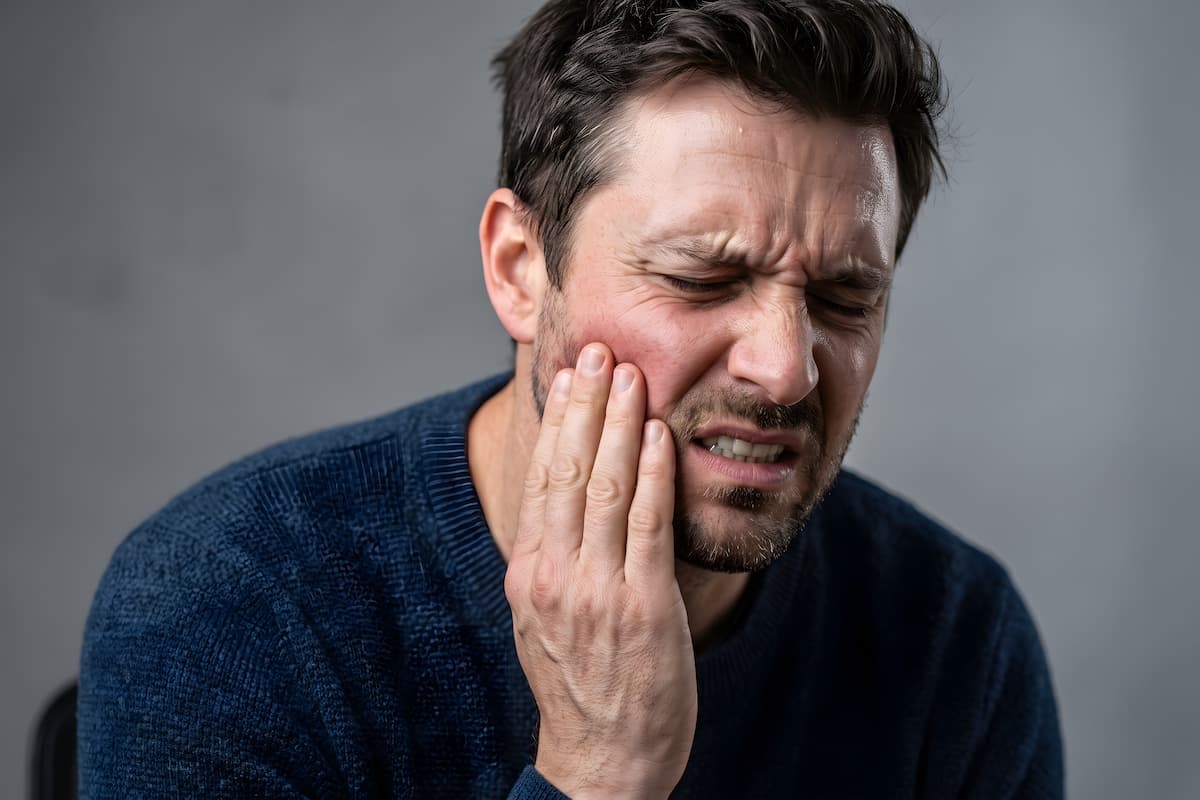
Severe Tooth Pain: Practical Steps Before Dental Assessment
Severe tooth pain can be difficult to ignore. Whether it began gradually or came on without warning, it can affect your ability to eat, sleep and concentrate. The discomfort may feel constant, throbbing or sharp — and the waiting period before you can see a dentist can feel especially challenging.
This article explains what you can safely do while waiting for dental assessment, what to avoid, and when your symptoms may require more urgent attention. It is written as general educational information and is not a substitute for professional dental assessment.
Quick Answer: What Should You Do for Severe Tooth Pain Before Seeing a Dentist?
Keep the area as clean as possible with gentle brushing and rinsing. Over-the-counter pain relief, used according to the packaging, may help manage discomfort. Avoid very hot, cold, or hard foods if they worsen the pain. Contact a dentist promptly — severe, worsening or swelling-related pain may need urgent assessment rather than a routine appointment. Do not attempt DIY dental treatment.
Why Severe Tooth Pain Should Not Be Ignored
Severe tooth pain is your body's way of indicating that something in or around the tooth requires attention. It is not simply discomfort that will always resolve on its own.
The pain may be caused by a range of dental problems — including tooth decay that has progressed deeply into the tooth, inflammation of the inner tooth tissue (the dental pulp), a dental infection, a cracked or fractured tooth, damage to an existing filling or crown, gum-related problems, or the effects of dental trauma. In some cases, sensitivity affecting multiple teeth can also produce significant discomfort.
A dental examination is needed to determine what is actually responsible. Symptoms alone — however severe — cannot reliably tell you or anyone else online what the underlying cause is.
Temporary self-care measures may help you cope with discomfort while you wait, but they do not treat the dental problem causing the pain.
What to Do First When Tooth Pain Is Severe
If you develop severe tooth pain, the most important first step is to contact a dentist as soon as possible and explain the nature and severity of your symptoms. Many dental practices have arrangements for patients experiencing acute pain, and some can offer urgent appointments.
While you wait for assessment, the following general steps may help you manage the situation sensibly:
- Contact your dental practice and describe your symptoms clearly. Mention the severity, how long it has been present, whether there is any swelling or fever, and whether the pain is getting worse.
- Check your oral hygiene — keeping the mouth reasonably clean is still important, even when a tooth is painful.
- Consider appropriate over-the-counter pain relief — used strictly according to the product packaging and your pharmacist's or clinician's advice.
- Avoid anything that clearly makes the pain worse, such as very hot drinks, cold foods, hard or crunchy foods, or unnecessary pressure on the area.
- Monitor your symptoms — note whether the pain is improving, stable, or getting progressively worse, as this information will help your dentist.
Temporary Measures That May Help Manage Discomfort
The following general measures may help you cope with severe dental pain while awaiting professional assessment. They are not treatments for the underlying problem.
Keeping the Mouth Clean
Gently brushing your teeth, including areas near the painful tooth if tolerable, helps reduce the bacterial load in the mouth. You may find a toothbrush with soft bristles more comfortable.
Warm salt water rinses — made by dissolving a small amount of table salt in a glass of warm (not hot) water — are widely used as a gentle, temporary mouth rinse. They do not treat infection and should not replace dental care, but they may help keep the area around the tooth clean and provide mild, temporary comfort for some people.
Eating and Drinking Carefully
Avoid foods and drinks that appear to aggravate the pain. For many people experiencing severe dental pain, this means:
- Avoiding very hot or very cold food and drinks, particularly if temperature changes trigger or worsen symptoms
- Choosing softer foods that require less chewing
- Avoiding hard, crunchy, or particularly chewy foods
- Chewing on the opposite side of the mouth where possible
These are practical adaptations, not clinical treatments.
Over-the-Counter Pain Relief
Over-the-counter pain relief medicines can help some people manage severe toothache before seeing a dentist. General principles include:
- Always read and follow the product packaging carefully.
- Consult a pharmacist if you are unsure which medicine is appropriate for you.
- Ibuprofen (an anti-inflammatory medicine) is commonly used for dental pain in adults and may help reduce both pain and inflammation. However, it is not suitable for everyone. It should be avoided or used with caution by those who are pregnant, have stomach ulcers, kidney problems, asthma triggered by NSAIDs, or who take certain other medicines including blood-thinners. Always consult your pharmacist if you are unsure.
- Paracetamol is an alternative that suits a wider range of people, but is not suitable for those with liver problems or who are already taking medicines containing paracetamol. Follow the dosing instructions on the packaging carefully.
- Some people find that alternating paracetamol and ibuprofen, in line with product instructions, provides better relief than either alone. Speak to a pharmacist about whether this approach is appropriate for you personally.
- Do not exceed the stated dose, and do not combine medicines without understanding whether it is safe for you to do so.
- Pain relief medicines address discomfort. They do not resolve dental infections, tooth decay, fractures or any other underlying dental cause.
If you are pregnant, taking other medicines, or managing another health condition, always seek pharmacist or clinician advice before taking pain relief medicines.
What to Avoid
Some approaches commonly suggested online for severe toothache can be unsafe, ineffective or potentially harmful. Please avoid the following:
- Placing aspirin directly against the tooth or gum — aspirin is an acidic medicine. Holding it against soft tissue can cause chemical burns to the gum.
- Applying household substances or chemicals — these are not designed for use in the mouth and can damage tissues.
- Using concentrated essential oils directly on the gum or tooth without appropriate guidance — some concentrated preparations can irritate or damage soft tissue.
- Attempting to drain swelling yourself — do not try to cut, burst or puncture any swollen area around a tooth or gum. This can introduce further bacteria and cause serious harm.
- Using leftover prescription medicines — antibiotics or prescription pain medicines prescribed during a previous episode should not be self-administered without appropriate clinical assessment. They may not be appropriate for your current situation, and self-prescribing antibiotics without clinical oversight is not appropriate.
- Exceeding the recommended dosage of any over-the-counter medicine in an attempt to get stronger relief.
- Delaying dental assessment simply because pain relief medicine reduces the discomfort temporarily. Temporary improvement does not necessarily mean the underlying dental problem has resolved.
Severe Tooth Pain Without Swelling
The absence of visible swelling does not mean that a dental problem is minor or that urgent assessment is unnecessary. Severe, persistent or worsening dental pain — even without visible facial swelling — can indicate a significant underlying problem such as inflammation of the dental pulp or an early-stage dental infection. A dentist can assess whether the level of pain and the associated clinical findings require prompt attention.
Do not reassure yourself that a lack of swelling means everything is fine. Swelling is an important warning sign when it is present, but its absence does not confirm that the tooth and surrounding structures are unaffected.
Severe Tooth Pain That Worsens at Night
Many people find that severe tooth pain feels considerably worse at night. This is not unusual. When you lie down, blood pressure in the head increases slightly, which can intensify the sensation of throbbing dental pain. Additionally, there are fewer distractions at night to draw attention away from the discomfort.
Some practical adaptations that may help include:
- Keeping your head slightly elevated with an extra pillow, which may reduce the sensation of throbbing
- Taking appropriate pain relief as directed and in good time before you expect to sleep
- Avoiding eating or drinking anything that aggravates the pain close to bedtime
If severe tooth pain is consistently disrupting your sleep, or if pain is worsening progressively over several nights, this supports the case for seeking prompt dental assessment rather than continuing to manage symptoms at home.
Severe Tooth Pain When Biting or Under Pressure
Pain that occurs specifically when biting or when applying pressure to the tooth can occur for a range of reasons, including a cracked tooth, a dental infection involving the structures at the root tip, or problems with an existing restoration. This type of pain can sometimes be severe and may be difficult to manage through self-care alone.
Avoid biting on the affected side where possible, and contact your dentist to explain the nature of the symptoms. Pain on biting — particularly if sudden, severe, or accompanied by other symptoms — warrants professional assessment.
When Severe Tooth Pain Needs Urgent Dental Assessment
Some situations require you to contact a dentist urgently rather than waiting for a routine appointment. Seek urgent dental advice if you experience:
- Severe pain that is worsening rather than remaining stable
- Significant facial swelling, or swelling that appears to be increasing
- Swelling affecting the eye area, the neck, or under the jaw
- A fever or feeling generally unwell alongside dental pain
- A bad or unpleasant taste in the mouth that may suggest pus
- Difficulty opening your mouth
- Pain following significant dental trauma such as a blow to the face or a tooth being knocked
These symptoms can indicate a problem requiring urgent dental assessment. They do not necessarily mean that an emergency exists, but they do mean that waiting several days for a routine appointment may not be appropriate.
If you are registered with a dental practice, call them and describe your symptoms clearly. If you need urgent dental care and cannot contact your own dentist, NHS 111 can help you find appropriate urgent dental services.
When to Seek Emergency Medical Attention
Most severe toothaches, while genuinely distressing, do not constitute a medical emergency. However, dental infections can in rare cases spread beyond the tooth and surrounding gum tissue to affect other structures.
Seek emergency medical attention — call 999 or go to your nearest Accident and Emergency department — if you experience:
- Significant difficulty breathing
- Significant difficulty swallowing
- Rapidly progressive swelling of the face, neck or floor of the mouth
- Feeling acutely unwell in a way that suggests a serious systemic problem
- Swelling that is extending towards the throat or eye in a way that appears to be changing quickly
These symptoms can indicate a spreading infection or another acute medical problem that requires emergency medical care — not simply a dental appointment.
Do not wait for a dental appointment if any of the above symptoms are present.
This distinction is important: the majority of people with severe tooth pain need prompt dental assessment, not emergency medical care. However, the warning signs above should not be ignored or dismissed.
Can Severe Tooth Pain Go Away on Its Own?
In some cases, dental pain may reduce or temporarily disappear, even without treatment. This does not necessarily mean the underlying dental problem has resolved.
For example, if the nerve tissue inside a tooth becomes severely damaged or dies, the associated pain signal may reduce. This does not mean the tooth has healed — it may mean that the tissue responsible for generating pain has become non-viable. The underlying infection or damage may still be present and may continue to cause harm without obvious symptoms for a period.
Temporary improvement in pain is not a reliable indicator that professional assessment is no longer needed. If you have had significant tooth pain that seems to have settled, it is still advisable to have the tooth assessed by a dentist.
Does Severe Tooth Pain Always Mean There Is an Infection?
No. Severe dental pain can have several possible causes, and a dental examination is needed to determine what is responsible.
Possible causes of significant tooth pain may include:
- Tooth decay that has progressed into deeper layers of the tooth
- Pulpitis — inflammation of the dental pulp (the inner soft tissue of the tooth), which can be reversible or irreversible depending on the degree of damage
- Dental abscess — a collection of pus caused by bacterial infection, which can develop around the tip of the tooth root or in the surrounding gum tissue
- Cracked or fractured tooth — which can cause sharp, severe pain particularly on biting
- Trauma — from a direct blow, accident or injury
- Gum problems — including a form of localised gum infection around a partially erupted tooth
- Problems with an existing dental restoration — such as a cracked filling or failing crown
- Severe dental sensitivity — which in some cases can produce significant discomfort
Only a dental examination — and in many cases dental X-rays — can determine which of these, or another cause, is responsible for the pain you are experiencing.
What a Dentist May Assess
When you attend a dental assessment for severe tooth pain, your dentist will typically:
- Ask you about the history of the pain — when it started, what makes it better or worse, whether it is constant or intermittent, and whether you have noticed any swelling, fever or other symptoms
- Examine the teeth, gums and surrounding tissues
- Assess sensitivity to temperature or pressure where clinically appropriate
- Take dental X-rays if needed to assess the tooth roots, surrounding bone and any signs of infection
- Form a clinical picture and discuss appropriate options with you
Understanding what to expect at the assessment can help reduce anxiety about attending.
What to Tell Your Dentist
Being able to describe your symptoms clearly helps your dentist assess the situation more efficiently. It may be helpful to note:
- When the pain started
- Whether it came on suddenly or gradually
- Whether it is constant or triggered by something (heat, cold, biting, lying down)
- Whether it wakes you at night
- The severity of the pain on a scale from mild to unbearable
- Whether there is any swelling, bad taste or fever
- Any medicines you have taken and whether they helped
- Any recent dental treatment or trauma to the area
While You Wait: A Practical Summary
To summarise the key practical steps while waiting for dental assessment:
Do:
- Contact your dentist promptly and explain your symptoms
- Keep your mouth as clean as reasonably possible
- Use over-the-counter pain relief if appropriate, following the packaging instructions
- Eat soft foods and avoid temperature extremes if they aggravate the pain
- Monitor whether your symptoms are changing
Avoid:
- Placing aspirin against the tooth or gum
- Attempting to drain any swelling yourself
- Using concentrated substances not intended for dental use
- Self-prescribing leftover prescription medicines
- Exceeding medicine dosing instructions
- Reassuring yourself based on temporary improvement alone
Seek urgent dental advice if:
- Pain is severe and worsening
- You have facial swelling or fever
- You have difficulty opening your mouth
- You have a bad taste suggesting possible pus
Call 999 or go to A&E if:
- You have significant difficulty breathing or swallowing
- Swelling is rapidly progressing towards the neck or throat
- You feel acutely and severely unwell
Frequently Asked Questions
Can severe tooth pain occur without any visible swelling?
Yes. The absence of visible swelling does not mean the underlying dental problem is minor. Severe or persistent pain without swelling can still indicate a significant issue such as pulp inflammation or early-stage infection. A dentist can assess the affected tooth and surrounding structures to determine what is happening.
Why does severe tooth pain often feel worse at night?
When you lie flat, increased blood pressure in the head can intensify throbbing dental pain. There is also less distraction at night, which can heighten awareness of discomfort. Keeping your head slightly elevated and taking appropriate pain relief in good time may help. Persistent or worsening night pain supports the need for prompt dental assessment.
I have severe tooth pain only when biting. What might cause this?
Pain specifically on biting can occur with a cracked tooth, an infection at the root tip, or a problem with an existing filling or crown. It can sometimes be severe and difficult to manage through self-care. Avoiding pressure on the affected side may reduce discomfort temporarily, but a dental assessment is needed to identify the cause.
Can over-the-counter painkillers get rid of severe tooth pain completely?
Over-the-counter pain relief may reduce the severity of dental pain for some people, but it does not treat the underlying dental problem. In some cases, very severe dental pain responds poorly to standard doses of over-the-counter medicines alone. Do not exceed the stated dose. Speak to a pharmacist if you are unsure which medicine is appropriate for you.
My severe tooth pain has reduced. Does that mean it has resolved?
Not necessarily. A temporary reduction in pain — including pain that appears to disappear — does not confirm that the underlying dental problem has resolved. In some cases, pain may reduce if nerve tissue becomes severely damaged, but this does not mean the tooth is healthy. A dental assessment is still advisable even if symptoms seem to have improved.
What is the difference between urgent dental care and a dental emergency?
Urgent dental care covers situations where severe, worsening or functionally disruptive pain — particularly with swelling or fever — means you should be seen promptly rather than at a routine appointment. A dental emergency involving medical risk occurs when symptoms such as significant difficulty breathing or swallowing, rapidly spreading facial or neck swelling, or serious systemic symptoms are present. In those circumstances, call 999 or attend Accident and Emergency rather than waiting for any dental appointment.
Does severe tooth pain always mean I need a tooth removed?
No. Severe dental pain can have several possible causes, and treatment depends entirely on the clinical findings at examination. Depending on the cause and the condition of the tooth, options may include addressing the decay, treating the pulp, managing an infection, or other clinically appropriate care. A dentist can only recommend appropriate treatment after assessing the tooth directly.
Should I take antibiotics for severe tooth pain?
Antibiotics are prescription medicines. They should only be taken when prescribed by a clinician who has assessed your specific situation. Do not self-prescribe or take antibiotics left over from a previous episode. Antibiotics are not always appropriate for dental pain, even when infection is present, and their use requires clinical assessment. If your dentist or doctor determines that antibiotics are appropriate following examination, they will prescribe them.
What if I cannot reach my own dentist?
If you are unable to contact your own dental practice and need urgent dental advice, NHS 111 (call 111 or visit 111.nhs.uk) can help you access urgent dental services in your area. Do not delay seeking help for significant or worsening symptoms.
I have severe tooth pain and my jaw feels stiff. Should I be concerned?
Difficulty opening the mouth alongside severe tooth pain and facial swelling can indicate a more serious dental infection that requires urgent assessment. Contact a dentist urgently and describe all your symptoms clearly. If difficulty swallowing or breathing accompanies these symptoms, seek emergency medical care.
Taking the Next Step
Severe or persistent tooth pain deserves proper dental attention. Temporary self-care measures and over-the-counter pain relief may help you manage discomfort while you wait, but they do not address the underlying dental cause — and the cause matters.
If you are experiencing significant dental pain, the most appropriate step is to arrange a professional dental assessment. A dentist can examine the affected tooth and surrounding structures, take appropriate X-rays, identify what is responsible for the pain, and discuss the most suitable options for your individual situation.
Please do not wait and hope that severe pain will resolve on its own. If symptoms include significant swelling, fever or any of the warning signs described in this article, seek prompt or urgent help rather than delaying.
Dental Disclaimer
This article has been written for general educational purposes only. It provides information about practical steps that may help patients manage severe tooth pain while awaiting professional dental assessment. It does not constitute individual dental advice, diagnosis or treatment.
Dental pain can arise from a range of different causes, and the information presented here cannot account for your personal dental history, medical background, current medications or individual clinical circumstances. Online information is not a substitute for a direct dental examination by a qualified clinician.
If you are experiencing severe, worsening or persistent tooth pain, you should seek appropriate professional dental assessment. If you have symptoms that could indicate a spreading infection or a risk to your breathing or swallowing, seek emergency medical help without delay.
If symptoms persist, worsen or concern you, please contact a dental professional or call NHS 111 for guidance.
Written Date: 16 September 2026
Next Review Date: 16 September 2027
This article should be reviewed for clinical accuracy, regulatory alignment and relevance on the stated review date.
Schema Recommendation
The following schema types are recommended for this article:
- Article (specifically
MedicalWebPageorArticleschema) — to reflect that this is an educational health information article with identifiable authorship, date of publication and review date. - FAQPage — applicable to the FAQ section, provided implementation is consistent with current Google eligibility requirements for FAQ rich results. Each FAQ should map to a distinct
QuestionandacceptedAnswerpair. - BreadcrumbList — recommended to support site navigation structure, for example: Home › Blog › Severe Tooth Pain.
JSON-LD implementation should be handled by the development or SEO team in line with current Google structured data guidelines. Schema should accurately reflect the article content and must not be used to misrepresent the nature or scope of the information provided.
Ready to Book an Appointment?
Our team is here to help you with all your dental and medical needs.








