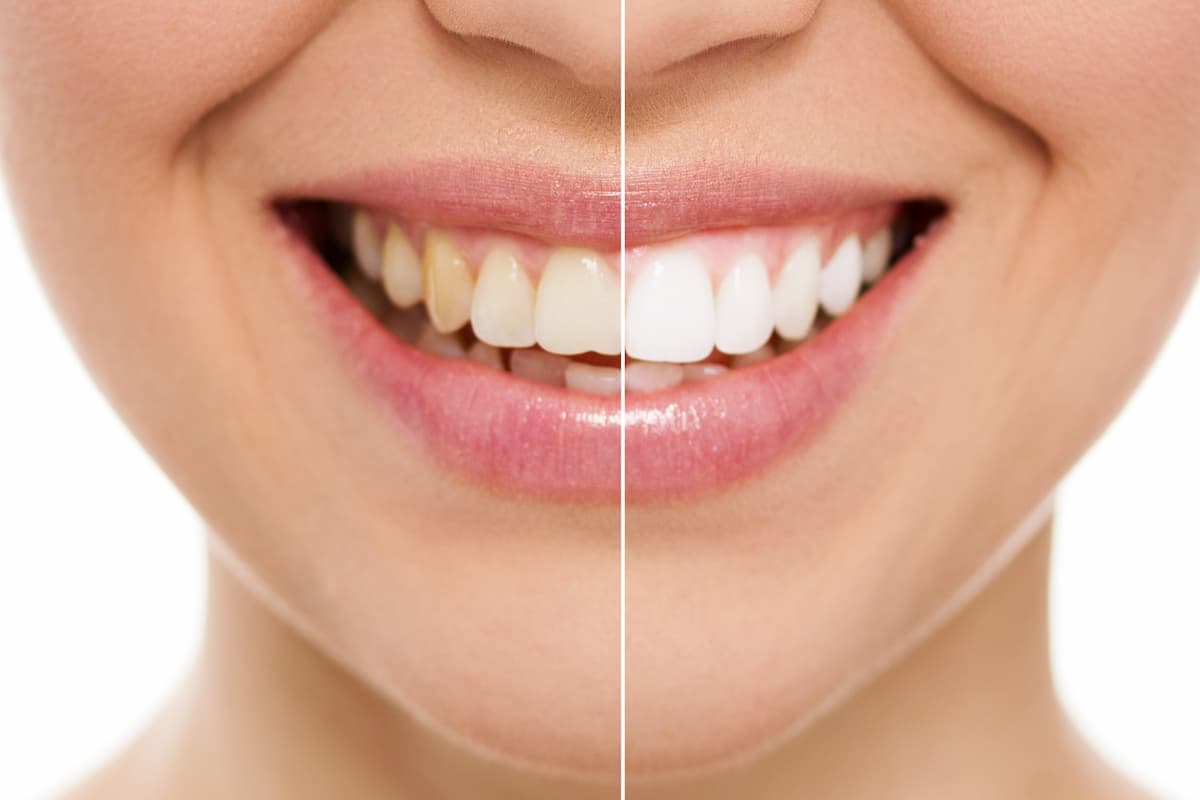
How Does Teeth Whitening Work For Stained Teeth At Home?
Stained teeth are one of the most common dental concerns people seek information about. Whether discolouration has built up gradually from years of tea and coffee, or whether you have noticed your teeth have simply lost their brightness over time, understanding how whitening actually works — and what it can and cannot change — is the starting point for making an informed decision.
This article explains the science behind at-home teeth whitening in straightforward terms: what whitening agents do inside the tooth, why different types of staining respond differently, and why individual circumstances matter before beginning any whitening process.
How Does Teeth Whitening Work at Home?
What Actually Happens to a Stained Tooth During Whitening?
To understand how whitening works, it helps to understand the structure of a tooth and where staining occurs.
Teeth have an outer layer of enamel — the hardest substance in the human body — beneath which lies a softer, naturally yellow tissue called dentine. Enamel itself is semi-translucent, which means the colour of the dentine beneath it significantly influences how a tooth appears overall.
When we talk about tooth staining, we are generally describing one of two things: discolouration that has settled onto or within the surface of the enamel from external sources, or discolouration that originates within the tooth itself. These two categories — extrinsic and intrinsic staining — respond very differently to whitening, and this distinction is central to understanding why results vary so widely between individuals.
When a peroxide-based whitening agent is applied to the tooth surface, it does not work like a cleaning product that lifts a stain off a surface. Instead, the peroxide penetrates the enamel and initiates a chemical reaction that acts on the chromogenic molecules — the compounds responsible for the colour of the stain. Through a process of oxidation, these larger, darker molecules are broken down into smaller, less pigmented fragments, which makes the tooth appear lighter overall.
This is an important distinction. Whitening is a chemical process that works within the tooth structure, not simply on its surface.
Which Types of Tooth Stains Can Whitening Improve?
Not all staining is equal, and understanding which category applies to your teeth is genuinely useful before deciding whether whitening is likely to help.
Extrinsic Staining
Extrinsic stains sit on or very close to the surface of the enamel. They develop when chromogenic compounds from food, drink or tobacco bind to a thin protein film — called the pellicle — that coats the tooth surface.
Common sources of extrinsic staining include:
- Tea and coffee — among the most frequent causes of surface tooth staining in the UK
- Red wine — contains tannins and chromogens that adhere readily to enamel
- Tobacco — smoking or other tobacco use produces particularly tenacious staining that can penetrate enamel over time
- Certain foods — including some curries, berries and sauces with high pigment content
- Poor oral hygiene — allowing plaque to accumulate can trap chromogens and accelerate staining
Extrinsic staining generally responds well to peroxide-based whitening, particularly when it is relatively superficial. However, the depth of the staining and how long it has been present will influence how well it responds.
Intrinsic Discolouration
Intrinsic discolouration originates within the tooth itself, often in the dentine. This type of discolouration can arise from a number of causes, including:
- Dental fluorosis — excess fluoride exposure during tooth development
- Tetracycline antibiotic use during tooth formation in childhood
- Trauma — which may cause internal bleeding within the tooth
- Ageing — as enamel thins and dentine naturally darkens over time
- Developmental conditions affecting tooth mineralisation
Intrinsic discolouration is typically more difficult to address than extrinsic staining. Some forms may respond partially to prolonged or professionally supervised whitening, while others may not respond meaningfully to conventional peroxide-based treatment at all. This is one reason why professional assessment before whitening can be particularly useful — it helps determine which type of discolouration is present.
How Do Hydrogen Peroxide and Carbamide Peroxide Work?
The two active ingredients most commonly used in teeth whitening products are hydrogen peroxide and carbamide peroxide. Both are peroxide-based compounds, and both work through oxidation.
Hydrogen peroxide is an active whitening agent that begins releasing oxygen molecules relatively quickly on contact with the tooth surface. It is used in a range of whitening products, from professionally dispensed systems to some over-the-counter products.
Carbamide peroxide breaks down into hydrogen peroxide and urea when it contacts moisture in the mouth. Because this breakdown happens more slowly, carbamide peroxide is often used in overnight or extended-wear whitening trays, where a more sustained, gradual release of the active ingredient is beneficial.
The concentration of the whitening agent matters significantly. In the UK, the sale and supply of whitening products is regulated. Under current UK regulations — which follow EU-derived rules in this area — over-the-counter products are permitted to contain up to 0.1% hydrogen peroxide. Higher concentrations can only legally be supplied via a registered dental professional, who must also carry out a clinical assessment before supplying them. If you are deciding between home products and supervised options, this comparison of dentist whitening vs OTC whitening is a useful starting point.
This regulatory distinction is clinically important. It means that professional-grade whitening systems — including dentist-supervised home whitening trays — can deliver whitening agents at concentrations that are not available in standard consumer products, under appropriate supervision.
Why Do Some Stains Respond Better Than Others?
Several factors influence how well a tooth — or a specific type of staining — responds to whitening. Current clinical understanding indicates that outcomes depend on:
- The type of staining — extrinsic stains generally respond more readily than intrinsic discolouration
- The depth of the stain — more deeply embedded chromogens may require longer treatment or higher concentrations
- The natural base colour of the tooth — yellower teeth often respond better than greyish discolouration
- The whitening product and its concentration — not all products deliver equivalent results
- Duration and consistency of use — whitening is typically a gradual process, not an immediate transformation
- Individual tooth anatomy — the thickness and translucency of enamel varies between people
There is no universal whitening outcome. Two people who have both been regular coffee drinkers for the same number of years may achieve noticeably different results from the same product, because individual tooth structure and staining patterns differ.
Can Home Whitening Affect Fillings, Crowns or Veneers?
This is one of the most clinically significant points to understand about whitening, and one that is sometimes overlooked in consumer information.
Peroxide-based whitening agents work by chemically altering organic stain molecules within natural tooth structure. Dental restorations — including composite fillings, porcelain crowns, ceramic veneers and other tooth-coloured materials — do not contain the same organic structures. As a result, they do not typically whiten in the same way as natural enamel and dentine.
This means that if you have visible dental restorations at the front of your mouth, whitening your natural teeth may create a colour discrepancy, where the restoration remains its original shade while the surrounding teeth become lighter. This is an important reason to discuss your existing dental work with a dental professional before beginning whitening.
It is also worth noting that whitening does not repair restorations, alter their fit, or address any underlying dental concerns associated with them.
A Brief Comparison of Common Whitening Approaches
| Whitening Approach | Primary Purpose | How It Works | Key Limitation |
|---|---|---|---|
| Whitening toothpaste | Surface stain management | Primarily helps remove surface staining through mild abrasion or low-concentration whitening agents | Does not meaningfully alter intrinsic tooth colour |
| Over-the-counter whitening strips/products | Mild lightening of natural tooth colour | Uses low-concentration peroxide to act on stain molecules | Limited by legally permissible concentration; results vary |
| Dentist-supervised home whitening | Lightening natural tooth colour at home | Custom trays with professionally supplied whitening gel | Requires dental assessment; restorations unaffected |
| In-clinic professional whitening | Professionally supervised tooth lightening | Higher-concentration whitening systems applied in a controlled clinical setting | Requires assessment; not suitable for every patient |
Every factual statement in this table reflects current general understanding of whitening approaches. Individual results vary and no outcome is guaranteed.
For treatment details, you can review professional teeth whitening options.
What Can Make Teeth Whitening Less Effective or Unsuitable?
Even where whitening is appropriate, certain factors can reduce how effective it is or raise questions about suitability. These may include:
- Severely discoloured teeth — where staining is deeply intrinsic, conventional whitening may produce limited change
- Grey or blue-grey discolouration — which tends to respond less well than yellow-toned staining
- Existing dental restorations in prominent positions — where uneven colour change may result
- Very translucent or thin enamel — where structural characteristics of the tooth affect how whitening is reflected
- Teeth that have darkened following trauma or root canal treatment — which may require specialist assessment
Understanding these variables is not intended to discourage interest in whitening — it is intended to help set realistic expectations and highlight why individual assessment matters.
Is Home Teeth Whitening Suitable for Everyone?
Home whitening — whether via dentist-supervised trays or over-the-counter products — is not automatically appropriate for everyone. Certain dental circumstances may require assessment before whitening is attempted.
Situations where a dental professional may recommend caution or assessment include:
- Active tooth decay or gum disease — whitening should generally not be carried out until these are addressed
- Cracked or damaged teeth — where peroxide penetration may cause discomfort or unpredictable results
- High tooth sensitivity — whitening can be associated with temporary increased sensitivity, and some individuals may find this more pronounced
- Gum recession — which can expose dentine and increase the likelihood of sensitivity during whitening
- Pregnancy — current UK guidance advises that elective whitening is typically deferred during pregnancy
- Extensive visible restorations — where the risk of colour mismatch is relevant
Teeth whitening sensitivity — a temporary increase in tooth sensitivity or gum irritation during or after whitening — is one of the most commonly reported side effects. It is generally short-lived and resolves after treatment. Using a lower concentration, reducing application time, or using a toothpaste designed for sensitive teeth may help manage this, but a dental professional can offer more personalised guidance.
How Can You Approach Home Whitening More Safely?
If you are considering whitening your teeth at home, the following principles reflect current UK dental guidance and responsible practice:
- Understand the cause of your staining first — if you are unsure whether your discolouration is extrinsic or intrinsic, a dental assessment can clarify this
- Ensure your teeth and gums are in good health before beginning whitening
- Consider dentist-supervised home whitening if you want access to professionally appropriate concentrations with clinical oversight
- Follow product instructions carefully — overuse or extended contact time does not necessarily improve results and may increase sensitivity
- Maintain good oral hygiene during and after whitening — regular brushing, flossing and professional cleaning supports both dental health and the longevity of whitening results
- Be aware that results are gradual — peroxide-based whitening typically takes a number of sessions over days or weeks to produce noticeable change
- Protect whitening results by moderating intake of heavily pigmented foods and drinks, or rinsing soon after consuming them
Current UK dental guidance emphasises that whitening should be carried out safely, with appropriate clinical oversight where higher concentrations are involved, and that patient suitability should be properly assessed.
Frequently Asked Questions
Can whitening work on old coffee stains?
Older, more deeply embedded coffee stains may respond more slowly than recent surface staining, but peroxide-based whitening can still act on the chromogenic molecules responsible. Results will depend on how deeply the staining has penetrated the enamel and the concentration of the whitening agent used. A professional assessment can help determine the likely responsiveness of long-standing staining.
Why might one tooth remain darker than the others after whitening?
Individual teeth can respond differently to whitening due to variations in enamel thickness, underlying dentine colour, or because one tooth has experienced previous trauma, a root canal procedure, or has a restoration that does not whiten. If one tooth appears consistently darker than its neighbours, a dental professional may recommend further assessment to identify the cause.
Can whitening change the colour of dental fillings?
No. Peroxide-based whitening agents work on organic compounds within natural tooth structure. Composite resin fillings, porcelain crowns, ceramic veneers and other dental restorations do not contain these structures and generally do not whiten in the same way. This can result in a visible colour difference if your natural teeth lighten and your restorations do not.
Does whitening work differently on intrinsic and extrinsic stains?
Yes, significantly. Extrinsic stains — which sit on or near the surface of the enamel — are generally more accessible to whitening agents and tend to respond more readily. Intrinsic discolouration, which originates within the dentine or deeper enamel, is more challenging to address and may respond only partially, or not at all, to conventional home whitening approaches.
Why can whitening cause sensitivity?
Peroxide penetrates the enamel and can temporarily affect the nerve endings within the dentine, causing a transient increase in sensitivity. This effect is usually short-lived and resolves once whitening is stopped or paused. Individuals with naturally thin enamel, existing sensitivity, or gum recession may be more prone to this. Using a lower concentration product, reducing application time, or spacing out sessions may help manage sensitivity.
Can whitening toothpaste whiten teeth in the same way as peroxide gel?
Whitening toothpastes primarily work by helping to remove surface staining through mild abrasives or, in some formulations, a very low concentration of whitening agent. They are not equivalent to peroxide-based whitening gels in terms of their mechanism or the degree of colour change they can achieve. Whitening toothpaste may help maintain whitening results and reduce surface staining, but it is unlikely to produce the same degree of lightening as a peroxide-based whitening system.
What happens if staining does not respond to whitening?
Where conventional whitening produces limited results — particularly for intrinsic discolouration that does not respond to peroxide — alternative cosmetic dental approaches such as porcelain veneers or composite bonding may be worth discussing with a dental professional. These options mask rather than bleach the discolouration and are separate from whitening treatment.
Can someone with existing dental restorations still whiten their natural teeth?
Yes, it may be possible to whiten natural tooth structure even when dental restorations are present. However, the restorations themselves will not change colour, which may result in a visible mismatch if the natural teeth lighten significantly. This is best discussed with a dental professional before beginning whitening, so that the position and visibility of any restorations can be considered as part of the decision.
How long do home whitening results typically last?
Whitening results are not permanent. The longevity of results depends on lifestyle factors — particularly the consumption of chromogenic foods and drinks, tobacco use and oral hygiene — as well as the natural ageing process. Results from professionally supervised home whitening may last longer than those from over-the-counter products, and occasional top-up treatment is sometimes recommended. No specific duration can be guaranteed.
Is it safe to use over-the-counter whitening products without a dental check-up first?
Over-the-counter whitening products available in the UK are permitted to contain only very low concentrations of whitening agent, in line with current regulations. While they are generally considered low-risk for most people, individuals with active dental problems — such as cavities, gum disease or cracked teeth — may find that whitening aggravates existing issues. A dental check-up before whitening, particularly if you have not seen a dentist recently, is a sensible precaution.
A Note Before You Begin Whitening
If you are thinking about whitening your teeth at home, taking time to understand the cause of your discolouration is a worthwhile first step. Good oral hygiene — regular brushing, flossing and professional cleaning — forms the foundation of any whitening plan, and addressing existing dental concerns before beginning whitening may improve both safety and results.
If you are unsure about the type of staining you have, whether whitening is appropriate for your dental circumstances, or which approach might suit you best, speaking with a qualified dental professional is always a sensible next step. A clinical assessment can help identify the cause of discolouration, discuss realistic expectations, and ensure that any whitening — whether at home or in a clinical setting — is carried out safely and appropriately for you. You can book a dental assessment if you want personalised guidance before whitening.
Disclaimer
This article is for general information only and is not personal dental advice. Suitability and outcomes vary by individual clinical circumstances. A full assessment by a GDC-registered dental professional is needed before treatment. For urgent symptoms, contact your dentist or an emergency dental service.
Written Date: 28 August 2026 Next Review Date: 28 August 2027
Ready to Book an Appointment?
Our team is here to help you with all your dental and medical needs.








