How Can Whitening Help With Tobacco-Stained Teeth Today?
SEO Title: Teeth Whitening for Tobacco-Stained Teeth | Wimpole Street MD (57 characters including spaces)
H1: Can Whitening Really Help With Tobacco-Stained Teeth? (57 characters including spaces)
Meta Description: Discover how whitening for tobacco-stained teeth works, which stains may respond, and why a dental assessment matters before treatment. Read our guide. (155 characters including spaces)
Suggested URL Slug: /blog/whitening-for-tobacco-stained-teeth
Primary Keyword: whitening for tobacco-stained teeth
Secondary Keywords: tobacco stains on teeth, teeth whitening for smokers, smoking stains on teeth, how to remove tobacco stains from teeth, yellow teeth from smoking, nicotine stains on teeth, can teeth whitening remove smoking stains, professional teeth whitening, extrinsic tooth staining, intrinsic tooth staining, teeth whitening results for smokers, smoking and tooth discolouration, teeth whitening safety, causes of stained teeth, dental cleaning for tobacco stains
Search Intent: Informational + Treatment Research + Preventive Dental Education
Introduction
If you smoke or use tobacco products and have noticed your teeth becoming darker or more discoloured, you are not alone. Tooth staining is one of the most visible effects of tobacco use, and many people wonder whether whitening for tobacco-stained teeth could help restore a brighter appearance. The answer is nuanced. Whitening can make a meaningful difference in certain cases, but outcomes depend on the type and depth of staining, your overall oral health, and whether professional whitening is suitable for you as an individual.
This article explains how tobacco causes discolouration, how whitening works, and what to realistically expect — so you can make an informed decision before seeking a dental assessment.
Quick Answer: Can Whitening Help With Tobacco-Stained Teeth?
Whitening may lighten some tobacco-related tooth discolouration, particularly surface staining that has built up over time. However, effectiveness depends on the type and depth of the staining, the whitening method used, and individual suitability. Whitening does not remove every stain, repair enamel damage, or reverse the wider oral health effects of tobacco use.
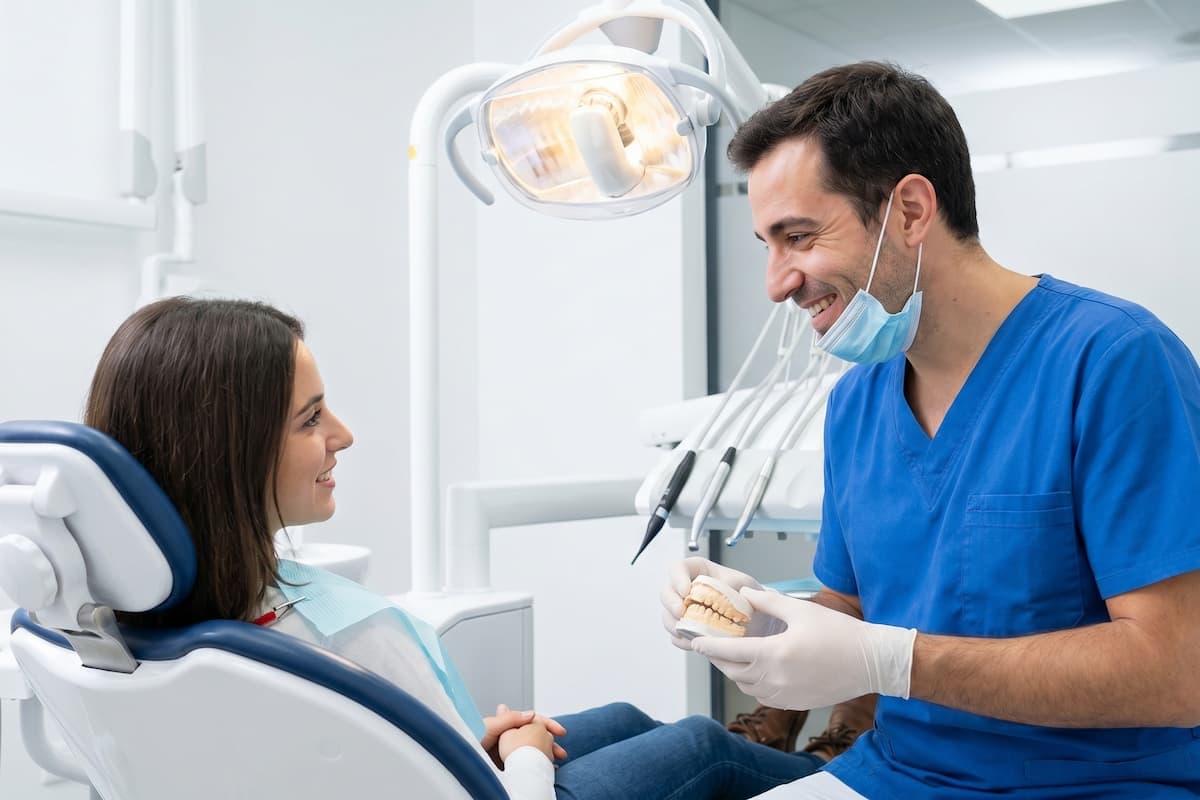
Image for illustrative purposes only.
How Does Tobacco Cause Teeth to Become Stained?
Tobacco products — including cigarettes, cigars, pipes and smokeless tobacco — contain hundreds of chemical compounds, many of which contribute directly to tooth discolouration. Two categories of compounds are particularly responsible:
Tar is a dark, sticky residue produced when tobacco burns. It adheres readily to tooth enamel and, over time, penetrates the microscopic surface texture of the tooth. Tar-related deposits are typically brown or black and can be stubborn to remove.
Nicotine, though colourless in its natural form, turns yellow or brown when it reacts with oxygen. Combined with tar, nicotine staining creates the characteristic yellow-to-brown discolouration commonly associated with smoking stains on teeth.
These compounds primarily cause extrinsic staining — discolouration that sits on or near the outer surface of the tooth. Over time, however, some pigments can penetrate the enamel and reach the underlying dentine, resulting in deeper, more stubborn discolouration that behaves quite differently during whitening treatment.
It is also worth noting that tobacco use can affect oral health more broadly. Reduced saliva flow, compromised gum health and changes to the oral environment can all accelerate the accumulation of staining deposits and dental plaque.
Can Whitening Help With Tobacco-Stained Teeth?
Professional teeth whitening uses a bleaching agent — most commonly hydrogen peroxide or carbamide peroxide — to lighten the natural colour of tooth enamel and dentine. When applied appropriately under dental supervision, this process can meaningfully improve the appearance of teeth affected by tobacco staining.
However, whitening is not a universal solution. Its effectiveness depends on several key factors:
- The extent of surface staining. Extrinsic stains that sit near the tooth surface tend to respond more readily to whitening agents.
- The depth of discolouration. Staining that has penetrated deeper into the dentine may lighten to some degree but is less likely to resolve completely.
- The duration of tobacco use. Longer exposure to tobacco compounds generally results in more entrenched staining that may respond more slowly or less fully.
- Overall tooth and gum health. Active dental problems may need to be addressed before whitening is appropriate.
Whitening can improve the appearance of tobacco-affected teeth for many people, but it cannot guarantee a specific shade or outcome, and results will vary between individuals.
Which Tobacco Stains Respond Best to Whitening?
Not all tobacco-related discolouration is the same, and understanding the distinction helps set realistic expectations.
Extrinsic Staining
Extrinsic staining is surface-level discolouration caused by tobacco compounds, food, drink and plaque accumulation. This type of staining typically responds well to professional dental cleaning and, to a greater extent, to professional whitening treatment. If your teeth appear yellowed or light brown from tobacco use without significant structural changes to the enamel, you may see a noticeable improvement.
Intrinsic Staining and Deeper Discolouration
Intrinsic discolouration occurs within the tooth structure itself — in the dentine or even deeper layers. It can result from long-term tobacco use, certain medications, past dental trauma, or natural ageing. Whitening agents can reach dentine to some degree, but deeply intrinsic staining is less predictable in its response. In some cases, alternative cosmetic dental options may be discussed with your dentist if whitening alone is unlikely to achieve the result you are hoping for.
Professional Whitening Versus Surface-Stain Removal
It is important to distinguish between two different procedures that are sometimes confused:
Professional dental cleaning (also called a scale and polish or hygiene appointment) involves the removal of hardened plaque deposits, tartar and some surface staining using professional instruments. This is part of routine dental care and can improve the overall appearance of the teeth, but it does not bleach or change the natural underlying colour of the tooth.
Professional teeth whitening uses a regulated bleaching agent to lighten the natural shade of the tooth. In the UK, whitening treatments containing more than 0.1% hydrogen peroxide may only legally be carried out by, or under the prescription of, a registered dental professional. This is an important safeguard for patient safety.
Both procedures may complement one another. A professional clean before whitening can remove surface deposits and help the whitening agent work more evenly across the tooth surface.
What Results Can You Realistically Expect?
Whitening results for people who smoke or have used tobacco products are genuinely variable. Some people experience a significant improvement in tooth shade; others may see a more modest change, particularly if discolouration is longstanding or deep.
Key points to bear in mind:
- Results are not permanent. Teeth naturally re-stain over time, particularly with continued tobacco use, and top-up treatment may be needed.
- Whitening does not change the colour of existing crowns, veneers, or tooth-coloured fillings. These restorations are made from materials that do not respond to bleaching agents in the same way as natural tooth structure, which can result in visible colour differences after whitening.
- Temporary tooth sensitivity or mild gum irritation are among the most commonly reported side effects of whitening. These effects are usually short-lived but should be discussed with your dentist beforehand.
Managing expectations honestly is an important part of any pre-treatment conversation with a dental professional.
Is Teeth Whitening Safe for People Who Smoke?
Teeth whitening carried out by or under the supervision of a registered dental professional is considered appropriate for many adults, including those who smoke. However, tobacco use can affect the oral environment in ways that are relevant to whitening suitability:
- Smoking is associated with gum disease, and active gum disease may need to be treated before whitening is considered appropriate.
- Compromised gum tissue may be more susceptible to irritation from whitening agents.
- Dry mouth, which can be more common in people who smoke, can affect both oral health and how the mouth responds to whitening products.
Your dentist is best placed to assess whether whitening is appropriate for you given your individual oral health status.
Why a Dental Assessment Matters Before Whitening
Before undergoing any whitening treatment, a thorough dental examination is an important first step. A dental professional can:
- Identify the likely cause and type of discolouration
- Assess gum health and the condition of existing restorations
- Identify any oral health issues that should be addressed first
- Advise on which whitening method may be most suitable
- Discuss realistic outcomes and potential risks
This step is not a formality — it is a clinical safeguard that helps ensure whitening is carried out safely and appropriately.
How to Help Prevent Further Tooth Staining
Good daily habits can help slow the return of tobacco staining after whitening treatment:
- Brush twice daily with a fluoride toothpaste. While whitening toothpastes may help manage surface staining to a limited degree, they do not bleach teeth and should not replace professional care.
- Clean between teeth using interdental brushes or floss to remove plaque from areas a toothbrush cannot reach easily.
- Attend regular dental appointments for professional cleaning and oral health monitoring.
- Consider tobacco cessation support. Stopping smoking or using tobacco is one of the most significant steps you can take — not just for the appearance of your teeth, but for your overall oral and general health. Free NHS Stop Smoking services are available across the UK and can substantially improve your chances of quitting.
Whitening does not protect against the return of staining if tobacco use continues, and no whitening treatment addresses the broader oral health risks associated with tobacco.
When to Seek Dental Advice
You should speak to a dental professional if you notice:
- Persistent or unexplained tooth discolouration that does not have an obvious cause
- Tooth pain, sensitivity, or discomfort
- Bleeding or swollen gums
- Mouth ulcers or sores that do not heal within two to three weeks
- Any unusual changes to the inside of your mouth
These symptoms may be unrelated to staining and should not be assumed to be cosmetic. A dental professional can assess the cause and advise on appropriate next steps.
Frequently Asked Questions
Can teeth whitening remove tobacco stains?
Professional whitening can lighten many tobacco-related stains, particularly those near the tooth surface. Deeply ingrained or intrinsic staining may respond less fully. A dentist can advise on what may be achievable in your individual case.
Are smoking stains always removable?
Not always. Some surface staining can be reduced through professional cleaning and whitening, but staining that has penetrated deeper into the tooth structure may be harder to address with whitening alone.
Is professional whitening suitable for people who smoke?
It can be, depending on your overall oral health. Active gum disease or other dental problems may need to be treated first. A dental assessment is the appropriate starting point.
Can whitening remove nicotine stains completely?
Nicotine staining, combined with tar-related discolouration, can be lightened with professional whitening, but complete removal cannot be guaranteed. Results depend on how deep the staining has penetrated and how long it has been present.
Will whitening work on crowns, veneers or fillings?
No. Whitening agents do not change the colour of dental restorations such as crowns, veneers or tooth-coloured fillings. After whitening, existing restorations may appear a different shade to the natural teeth around them.
Can brushing alone remove tobacco stains?
Brushing regularly with fluoride toothpaste helps manage plaque and some surface deposits, but it is unlikely to remove established tobacco staining on its own. Professional cleaning and, where appropriate, whitening treatment are more effective options.
How can I help prevent stains from returning after whitening?
Good daily oral hygiene, regular dental appointments, and reducing or stopping tobacco use are the most effective steps. Continued tobacco use will likely cause staining to return over time.
Should I have my teeth checked before whitening?
Yes. A dental examination before whitening is important to assess the cause of discolouration, the condition of your teeth and gums, and your suitability for treatment. It is also a legal requirement in the UK that whitening above a certain strength is prescribed or carried out by a registered dental professional.
Contextual Internal Links
Note to publisher: The following internal links are placeholders based on the site structure at https://www.wimpolestreetmd.co.uk. Please verify each URL against the live site and the approved URL list before publication. Replace or remove any links that do not correspond to verified, live pages. Do not publish fabricated URLs.
Suggested internal link destinations (subject to verification):
- Teeth whitening treatment page — anchor text: professional teeth whitening
- Dental hygiene / hygienist services page — anchor text: professional dental cleaning
- General dentistry / dental examination page — anchor text: dental assessment
- Cosmetic dentistry overview page — anchor text: cosmetic dental options
- Dental veneers page — anchor text: veneers
- Oral health advice / preventive care page — anchor text: preventive dental care
- Blog hub — anchor text: dental health articles
- Contact / appointments page — anchor text: speak to a dentist at Wimpole Street MD
External Sources and References
The following sources support clinical claims made in this article. All should be verified for currency before publication.
- NHS — Teeth whitening: https://www.nhs.uk/live-well/healthy-teeth-and-gums/teeth-whitening/
- NHS — Stop smoking support: https://www.nhs.uk/better-health/quit-smoking/
- General Dental Council (GDC) — Standards for the dental team: https://www.gdc-uk.org/standards-guidance/standards-and-guidance/standards-for-the-dental-team
- Committee of Advertising Practice (CAP) — Healthcare and beauty: https://www.asa.org.uk/codes-and-rulings/advertising-codes/non-broadcast-code.html
- British Dental Association (BDA) — Tooth whitening: https://www.bda.org/ (navigate to relevant patient information section)
- Public Health England / UKHSA — Tobacco and oral health: https://www.gov.uk/government/collections/tobacco
- Joiner A. (2006). The bleaching of teeth: A review of the literature. Journal of Dentistry, 34(7), 412–419. — Supporting the mechanism of peroxide-based whitening.
- Addy M, Moran J. (1995). Mechanisms of stain formation on teeth, in particular associated with metal ions and antiseptics. Advances in Dental Research, 9(4), 450–456. — Background on extrinsic staining mechanisms.
Publisher note: Verify journal citations against current literature and confirm ongoing accuracy before publication.
Recommended Schema Type
Primary schema: BlogPosting (or Article) — appropriate for an educational blog post published on the site's blog hub.
Secondary schema: FAQPage — the FAQ section contains distinct question-and-answer pairs and may be eligible for FAQ rich results under current Google Search guidelines. Verify eligibility against Google's current structured data documentation before implementation, as eligibility criteria are subject to change.
Do not apply MedicalWebPage or Physician schema unless the page genuinely qualifies under Google's health content guidelines and the site's verified credentials support this classification.
Dental Disclaimer
This article is intended for general educational purposes only. It does not constitute individual dental advice, diagnosis or treatment recommendation. Teeth whitening suitability, likely outcomes and safety depend on your personal oral health history and should be assessed by a registered dental professional. If you have concerns about tooth discolouration, oral pain, bleeding gums or any other changes in your mouth, please seek professional dental advice promptly.
Written Date and Next Review Date
Written Date: 22 October 2026 Next Review Date: 22 October 2027
Ready to Book an Appointment?
Our team is here to help you with all your dental and medical needs.








