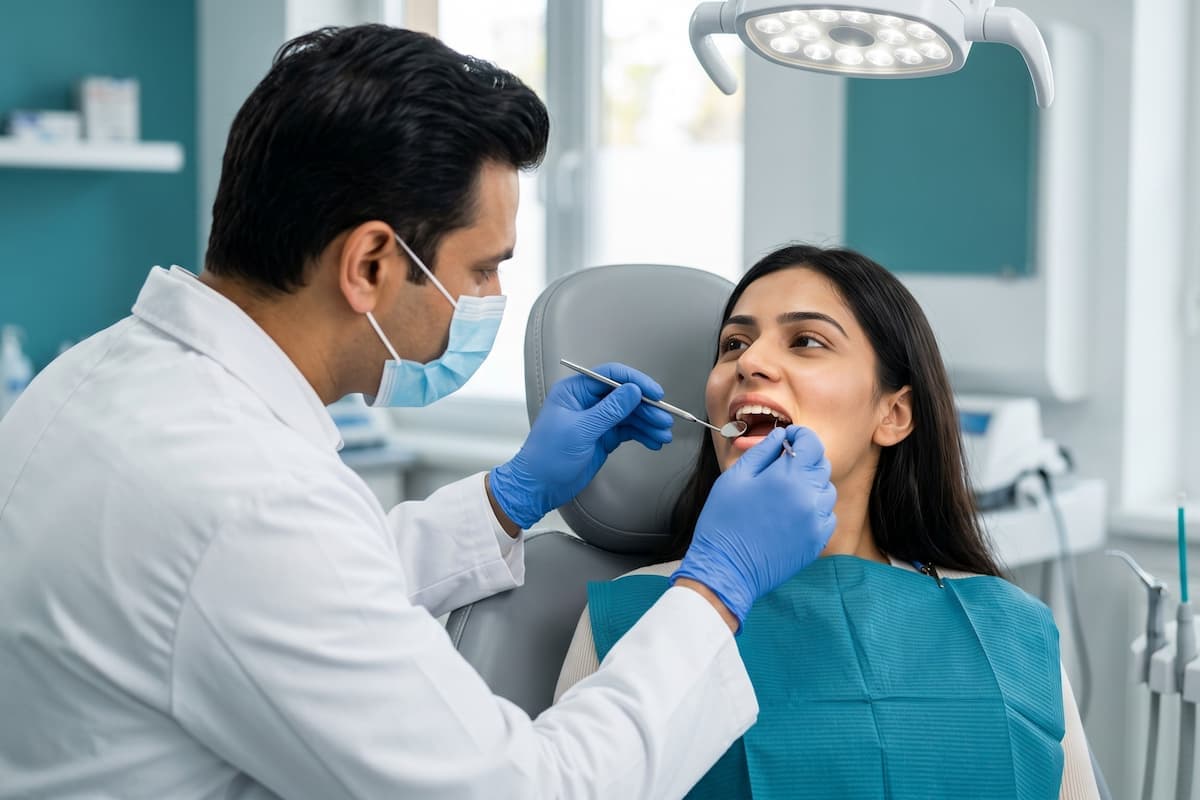
Hardened Tartar On Lower Teeth: How Dental Hygiene Helps
If you have noticed a rough, yellowish or brownish buildup along the inside edge of your lower front teeth, you are not alone. Hardened tartar on lower teeth is one of the most commonly reported findings during dental appointments in the UK. It can develop even in people who brush regularly and often forms in areas that are difficult to clean thoroughly at home. Understanding why it occurs — and what role professional dental hygiene plays — can help you take better care of your oral health over the long term.
Quick Answer — How does dental hygiene help with hardened tartar on lower teeth?
Once plaque hardens into tartar (also called calculus), it cannot be removed by brushing or flossing alone. A dental hygienist uses specialist instruments — including ultrasonic scalers and hand instruments — to safely remove hardened deposits from the tooth surface and around the gumline. Regular professional cleaning, combined with effective daily oral hygiene at home, can help reduce future buildup and support gum health.
Why Does Tartar Commonly Form on the Lower Teeth?
The lower front teeth — particularly behind them — are one of the most predictable sites for tartar accumulation. This is not simply about how well someone brushes. There is an anatomical reason for it.
Beneath the tongue sit the openings to the submandibular and sublingual salivary glands. These glands produce a significant portion of the saliva that flows continuously into the mouth throughout the day. Saliva contains calcium and phosphate minerals — the same minerals that give teeth their strength. However, when saliva pools around the lower front teeth, those minerals can gradually deposit onto the tooth surface, contributing to what dentists call mineralised plaque, or dental calculus.
This process means that even with consistent brushing, the lower front teeth — especially on the tongue-facing side — are particularly prone to developing calculus deposits over time.
It is also worth noting that tartar tends to accumulate more readily in areas that are harder to reach with a toothbrush, and the inside surfaces of the lower front teeth can be awkward to clean effectively for many people.
How Plaque Becomes Hardened Tartar
To understand why hardened tartar is different from ordinary plaque, it helps to know what each actually is.
Dental plaque is a soft, sticky film that forms on teeth throughout the day. It is made up of bacteria, food debris, and proteins from saliva. When plaque is new, it is relatively easy to disrupt — effective brushing and interdental cleaning can remove it before it causes problems.
The difficulty arises when plaque is not fully removed. Within a matter of days, the minerals present in saliva begin to bind with the plaque and gradually crystallise it. This mineralisation process transforms soft plaque into hardened tartar, or dental calculus — a substance that bonds firmly to the tooth surface.
Once calculus has formed, it has a rough, porous surface that makes it easier for new plaque to accumulate on top of it. This creates a cycle where existing deposits encourage further buildup, making consistent management important over the long term.
Why Brushing Alone Cannot Remove Established Tartar
This is one of the most important things to understand about tartar on lower teeth: no amount of brushing, however vigorous or frequent, can remove hardened calculus once it has formed.
Toothbrush bristles are designed to disrupt soft plaque on accessible tooth surfaces. They are not capable of breaking down mineralised deposits that have bonded to enamel or settled beneath the gumline.
Similarly, while interdental cleaning — using floss, interdental brushes, or water flossers — is an important part of daily oral hygiene, it is also unable to dislodge established calculus. These tools are highly effective at removing soft plaque and food debris from between the teeth, but they cannot reverse the mineralisation process.
This is not a reflection of effort or care. Tartar buildup is a normal biological process. It can slow with excellent oral hygiene, but professional removal is usually needed once deposits have hardened.
How a Dental Hygienist Can Help Remove Tartar
A dental hygienist is a registered dental professional with the clinical training and instruments required to safely remove hardened tartar from the tooth surface — including in areas that are difficult or impossible to access at home.
The process of professionally removing calculus deposits is called scaling. During a scale and polish, the hygienist uses a combination of specialist instruments to carefully remove tartar above and below the gumline.
What Scaling Generally Involves
Professional scaling typically involves one or both of the following approaches:
- Ultrasonic scaling: A vibrating instrument tip that uses high-frequency vibrations, combined with a water coolant, to break up and dislodge hardened calculus deposits. Many patients find this approach comfortable, although those with sensitive teeth may notice some mild sensation.
- Hand scaling: Fine metal instruments called scalers and curettes are used to carefully remove remaining deposits and smooth the tooth surface. This is particularly useful in more detailed areas or just below the gumline.
Following scaling, the teeth are often polished using a mild abrasive paste to help smooth the tooth surface and remove superficial staining, which can also make it slightly harder for new plaque to adhere as quickly.
It is worth noting that professional cleaning is a preventive and supportive procedure. It removes existing deposits, but it does not treat underlying gum disease on its own, and it does not replace the need for daily home care.
Tartar and Gum Health: Understanding the Connection
One of the reasons that managing calculus on lower teeth is considered important is its potential relationship with gum health. Tartar deposits — particularly those that form below the gumline — can be associated with gum irritation. The rough surface of calculus makes it a hospitable environment for bacteria to accumulate, and this bacterial presence near the gumline may contribute to inflammation.
Gum inflammation, or gingivitis, is characterised by redness, swelling, and a tendency for the gums to bleed during brushing. In many cases, it can improve with effective oral hygiene and professional cleaning. However, if left unaddressed, gum problems can sometimes progress — which is why maintaining gum health and addressing tartar buildup in a timely way is generally considered sensible.
It is important to say clearly: tartar does not automatically cause gum disease in every person, and professional cleaning alone is not a treatment for established periodontal conditions. Anyone with concerns about their gum health should seek a clinical assessment from a registered dental professional.
Why Tartar Can Return After Professional Cleaning
A question many patients have after their first scale and polish is: will the tartar come back?
The honest answer is that it often can, particularly in areas like the lower front teeth where saliva flow and mineral content naturally favour calculus formation. The rate at which new deposits develop varies between individuals and depends on factors including saliva composition, oral hygiene habits, diet, and other individual characteristics.
Professional cleaning removes the existing buildup and gives the teeth a cleaner baseline. But once cleaned, the mineralisation process can begin again. This is why dental hygienists and dentists typically recommend maintaining regular professional cleaning appointments alongside daily home care — not as a one-off treatment, but as an ongoing part of preventive oral health management.
How to Reduce Future Tartar Buildup at Home
While professional cleaning is the only way to remove established hardened tartar, consistent daily oral hygiene can meaningfully slow the rate at which new deposits form. The following evidence-aligned habits are generally recommended:
Brush Twice Daily With a Fluoride Toothpaste
Brushing morning and night — for approximately two minutes each time — helps remove soft plaque before it has the chance to mineralise. Using a fluoride toothpaste supports tooth enamel strength at the same time.
Pay attention to the technique as much as the frequency. Angling the bristles towards the gumline and using small, gentle circular movements (or following the guidance of your dental team) can help ensure that plaque near the gum margin is disrupted effectively.
Clean Between Your Teeth Daily
Toothbrush bristles cannot fully access the spaces between teeth. Using interdental brushes, dental floss, or a water flosser at least once a day helps remove plaque in these areas before it can harden. Your dental hygienist can advise on the most suitable method for your teeth and spacing.
Do Not Neglect the Tongue-Facing Surfaces of Your Lower Front Teeth
This area is particularly prone to calculus formation and is also easy to overlook during brushing. Making a conscious effort to clean the inner (lingual) surfaces of your lower front teeth thoroughly — tilting the brush handle downward and using the toe of the brush head — can make a meaningful difference over time.
Attend Regular Dental Check-Ups and Hygiene Appointments
The NHS recommends attending dental check-ups at intervals advised by your dental team, based on your individual risk level. Professional examinations allow deposits to be identified and removed before they become more established and harder to manage.
Consider Your Diet
Reducing the frequency of sugary or acidic foods and drinks reduces the fuel available for bacteria in plaque. Staying well hydrated and consuming a balanced diet supports general oral health, though dietary changes alone will not remove existing tartar.
When a Dental Assessment May Be Appropriate
If you have noticed hardened deposits on your lower teeth, visible staining, gum bleeding when brushing, or persistent bad breath, it may be appropriate to arrange an assessment with a dental professional. These symptoms do not necessarily indicate serious problems, but they are worth discussing with a registered clinician who can examine your teeth and gums properly.
Similarly, if you have not had a professional clean for some time, or if you are unsure whether your current oral hygiene routine is as effective as it could be, a dental hygiene appointment can be a useful starting point.
It is also important not to attempt to remove tartar at home using sharp implements or DIY tools promoted online. Doing so carries a genuine risk of damaging the tooth enamel or injuring the surrounding gum tissue.
A Final Note on Tartar and Oral Health
Hardened tartar on the lower teeth is common, and it is not a sign that someone has been neglecting their teeth. It can develop even in people with careful daily routines, simply because of the way saliva interacts with plaque in that area of the mouth.
What matters most is understanding the difference between what home care can achieve and what professional intervention provides. Daily brushing and interdental cleaning are fundamental to preventing new plaque from forming, but they cannot remove mineralised calculus once it has developed. Professional cleaning by a dental hygienist — combined with consistent home habits and regular dental check-ups — forms the foundation of an effective long-term approach to managing tartar and supporting overall oral health. Where deep molar grooves also trap food and plaque, it is worth reading how dental sealants help protect molar grooves.
If you have any concerns about tartar buildup on your lower teeth, speaking with a registered dental professional is always the recommended first step.
FAQs
Is it normal to have more tartar on the bottom teeth than the top?
Yes, this is very common. The salivary glands beneath the tongue release mineral-rich saliva directly near the lower front teeth, making this area particularly prone to calculus formation. Many people develop more noticeable deposits here than anywhere else in the mouth, even with good brushing habits.
Can using an electric toothbrush reduce tartar on my lower front teeth?
An electric toothbrush can be more effective than a manual brush at disrupting soft plaque, particularly for those who find it harder to maintain consistent manual technique. However, electric toothbrushes — like manual ones — cannot remove hardened tartar that has already mineralised. They are most useful as a preventive tool, helping to reduce how quickly new deposits develop between professional cleans.
Will professional tartar removal hurt?
Many patients find professional scaling comfortable, particularly when deposits are minimal. If tartar has accumulated beneath the gumline or in sensitive areas, some mild discomfort or sensitivity may be experienced during or after the procedure. If you have concerns about sensitivity, it is worth mentioning this to your hygienist beforehand, as they can adapt their approach accordingly.
How long does a professional scale and polish typically take?
This varies depending on the extent of tartar buildup and the number of teeth involved. A routine hygiene appointment may take anywhere from around 30 to 60 minutes in general terms. Your dental team is best placed to advise on what to expect based on your individual circumstances.
Can tartar under the gumline be removed the same way as tartar above the gumline?
Tartar that forms beneath the gumline — known as subgingival calculus — generally requires more careful removal using fine scaling instruments, and may require local anaesthetic in some cases depending on the depth and extent of the deposits. This is different from routine supragingival (above-gum) scaling, and your dental team will advise on the most appropriate approach during assessment.
Does tartar indicate poor dental hygiene?
Not necessarily. While insufficient brushing and interdental cleaning can accelerate tartar formation, some individuals develop calculus more readily than others due to individual differences in saliva composition, flow rate, and mineral content. Developing tartar despite a consistent oral hygiene routine does not mean someone has been careless — it simply means that professional cleaning is needed to supplement their home care.
How often should I have my teeth professionally cleaned to manage tartar buildup?
The appropriate frequency of professional hygiene appointments varies between individuals based on factors such as how quickly tartar accumulates, existing gum health, and overall oral hygiene habits. Your dental team is best placed to recommend a suitable recall interval following an assessment. Some people may benefit from more frequent visits, while others may need cleaning less regularly.
Is tartar on the lower teeth connected to bad breath?
Tartar itself does not produce odour, but the bacteria that accumulate in and around calculus deposits can contribute to bad breath in some individuals. If persistent bad breath is a concern, it is worth raising this during a dental appointment, as the cause is often multifactorial and a clinical assessment is the most reliable way to identify contributing factors.
Can children develop hardened tartar on their lower teeth?
Tartar can develop in children and teenagers, though it is less common than in adults. Good oral hygiene habits established early — including twice-daily brushing and regular dental visits — are important in reducing the likelihood of significant calculus forming. If a parent notices unusual deposits on a child's teeth, a dental appointment is the appropriate next step.
Does mouthwash help prevent tartar buildup on the lower teeth?
Some mouthwashes contain ingredients such as zinc citrate or pyrophosphates that may help slow the rate of tartar formation by interfering with the mineralisation process. These can be a useful addition to a daily oral hygiene routine, but they are not a substitute for brushing, interdental cleaning, or professional removal of existing deposits. A dental professional can advise on whether an anti-tartar mouthwash may be suitable for your situation.
Dental Disclaimer
The information provided in this article is intended for general educational purposes only. It does not constitute professional dental or medical advice, and it should not be used as a substitute for a consultation with a qualified, registered dental professional.
Every individual's oral health is different. The explanations and guidance contained in this article are general in nature and may not apply to your specific circumstances, symptoms, or clinical history. If you have concerns about tartar, gum health, tooth sensitivity, or any other aspect of your oral health, you are strongly encouraged to seek a personal assessment from a registered dentist or dental hygienist.
This article does not provide a diagnosis of any dental or medical condition, and no clinical outcomes or treatment results are guaranteed. The suitability of any dental procedure or oral hygiene approach varies between individuals and should always be determined through appropriate professional assessment.
Wimpole Street MD does not accept liability for any actions taken or not taken based solely on the content of this article.
Written Date: 10 August 2026 Next Review Date: 10 August 2027
Ready to Book an Appointment?
Our team is here to help you with all your dental and medical needs.








