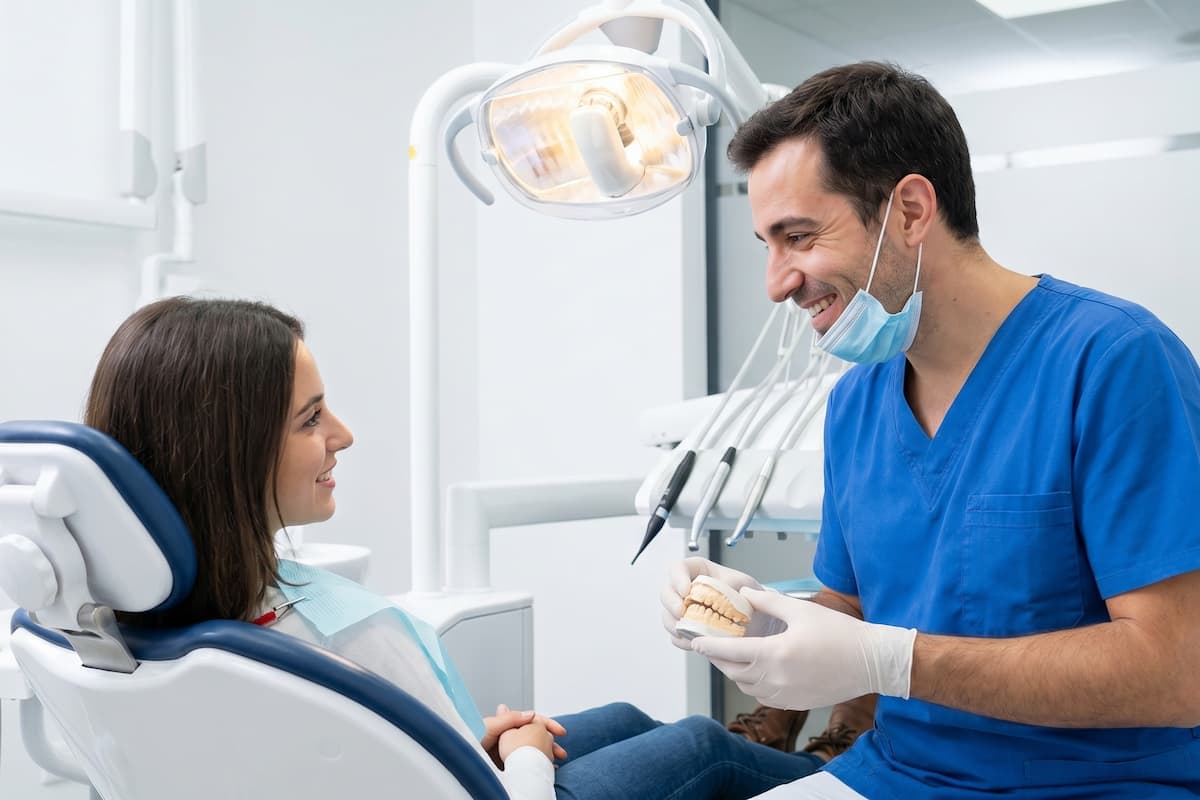
Dental Bridges vs Implants: Costs, Benefits and Differences
Replacing a missing tooth is one of the most common decisions patients face in restorative dentistry. Two of the most widely considered options are dental bridges and dental implants, and understanding the genuine differences between them is an important first step in any informed conversation with your dental team.
This article compares dentistry bridges vs implants in a balanced, clinically responsible way — covering how each works, what the procedures involve, how costs compare in the UK, what maintenance each option requires and which factors a dental professional may consider when discussing suitability.
Quick Answer: What is the difference between a dental bridge and a dental implant?
A dental bridge replaces a missing tooth using a fixed restoration supported by neighbouring teeth or by implants, depending on its design. A conventional dental implant uses a titanium fixture placed in the jawbone to support a crown or bridge independently. Neither option is universally superior — the most appropriate choice depends on individual clinical circumstances, including bone health, neighbouring-tooth condition and personal preferences.
What Is a Dental Bridge?
A dental bridge is a fixed restoration designed to fill the gap left by one or more missing teeth. It typically consists of one or more artificial teeth — known as pontics — held in place by dental crowns fitted over the natural teeth on either side of the gap. These supporting natural teeth are called abutment teeth.
Several designs of dental bridge exist, and their clinical indications differ:
- Conventional dental bridges use crowns cemented onto prepared abutment teeth on both sides of the gap. Preparing these teeth usually involves removing a small amount of enamel so that the crowns fit securely.
- Cantilever bridges are supported by an abutment tooth on one side only and may be considered in specific circumstances where adjacent teeth are available only on one side.
- Maryland bridges (also called resin-bonded bridges) use a metal or ceramic wing bonded to the back of an adjacent tooth, making them a more conservative option in some cases because they require minimal or no tooth preparation.
- Implant-supported bridges use dental implants rather than natural teeth as their support, making them structurally distinct from conventional tooth-supported bridges.
The choice of bridge design depends on the location of the missing tooth, the number of teeth being replaced, the condition of neighbouring teeth and other clinical factors. Not every bridge requires the same preparation, and your dental team will discuss which design may be appropriate for your situation.
What Is a Dental Implant?
A dental implant is a small titanium fixture placed into the jawbone to act as an artificial tooth root. Over a period of weeks to months, the bone naturally bonds with the implant surface — a biological process known as osseointegration. Once integration is established, an abutment is attached to the implant, and a final crown or bridge is secured on top.
A single dental implant with a crown can replace one missing tooth without involving the adjacent teeth at all. Where several consecutive teeth are missing, an implant-supported bridge may use two or more implants to support multiple replacement teeth — meaning not every missing tooth necessarily requires its own individual implant.
It is important to distinguish clearly between:
- A single dental implant supporting an individual crown
- A conventional dental bridge supported by natural teeth
- An implant-supported bridge supported by implants rather than natural teeth
These are different restorations with different clinical requirements, and the terminology is sometimes used loosely, which can cause confusion for patients researching their options.
How the Procedures Differ
Dental Bridge Procedure
The process of placing a conventional tooth-supported bridge typically involves:
- An initial examination and assessment of the abutment teeth and surrounding tissues
- Preparation of the abutment teeth, where necessary, including reshaping to accommodate the crowns
- Impressions or digital scans taken to guide laboratory fabrication
- Fitting of a temporary bridge while the permanent restoration is made
- Fitting, checking and cementing the final bridge
Treatment is usually completed over several appointments, though timelines vary depending on the specific bridge design and individual circumstances.
Dental Implant Procedure
Implant treatment involves more stages because it includes a surgical component and a healing period:
- Thorough assessment of bone volume, gum health and overall oral health
- Implant placement under local anaesthesia
- A healing period to allow osseointegration — this typically takes several weeks to several months
- Attachment of the abutment
- Fitting of the final crown or restoration
Because individual circumstances vary considerably — including whether additional bone or gum treatment is needed — no two implant treatment journeys are identical in duration or complexity.
Dental Bridge vs Implant: Cost Comparison in the UK
Cost is understandably an important consideration for many patients, and it is one area where accurate comparison requires care.
In the UK, NHS dental treatment may cover a bridge in some circumstances, subject to clinical need and the applicable NHS dental charge band. NHS dental charges in England are banded, with complex treatments falling into Band 3. However, implants are not routinely available on the NHS and are generally provided privately.
For private treatment, indicative price ranges vary considerably between practices, regions and the complexity of individual cases. As a guide:
- A conventional tooth-supported dental bridge may cost in the region of £600–£2,500 or more, depending on the number of units, materials and laboratory costs.
- A single dental implant with a crown may cost approximately £1,500–£3,000 or more at many private UK practices.
- An implant-supported bridge replacing several teeth will typically cost more than a single implant restoration, reflecting the number of implants and the design of the final bridge.
These figures are illustrative only. Actual treatment costs depend on individual clinical requirements, the materials used, preparatory treatment needed, practice location and any follow-up considerations. A detailed written treatment plan and cost estimate should always be obtained before proceeding.
It is also worth noting that comparing the cost of a single implant fixture alone with the total cost of a completed bridge is not a meaningful comparison. The full cost of both options, including all stages of treatment, should be considered.
Which Lasts Longer: Dental Bridge or Implant?
Longevity is another area where simple comparisons can be misleading. Both bridges and implants can remain functional for many years when maintained well, but neither carries a guaranteed lifespan.
Clinical studies have reported that well-maintained dental bridges can function effectively for 10–15 years or longer in many patients. The longevity of a bridge depends significantly on the health of the supporting teeth, oral hygiene, bite forces and whether gum disease is well controlled.
Dental implants have shown encouraging long-term outcomes in published research, with many studies reporting high survival rates over 10 years or more. However, the integrity of an implant restoration depends on bone health, gum health, maintenance quality and the absence of peri-implant disease.
Factors that may influence how long either option remains functional include:
- Quality of oral hygiene at home
- Frequency of professional dental maintenance
- Smoking or tobacco use
- General health conditions affecting healing
- Bruxism (tooth grinding or clenching)
- The condition of supporting teeth or surrounding bone over time
Neither option is immune to wear, mechanical failure or biological complications, and both may require repair, adjustment or eventual replacement.
Bone Loss: Dental Bridge vs Implant
After a tooth is lost, the jawbone in that area no longer receives the stimulation it previously obtained from the natural tooth root. Over time, this can lead to a gradual process of bone resorption, where the bone volume in the area reduces.
A conventional dental bridge replaces the visible tooth but does not replace the missing root. As a result, the bone beneath the pontic area does not receive the same stimulation as it would from a natural root or an implant, and some degree of resorption may continue in that region.
A dental implant is placed directly into the jawbone, and once osseointegration occurs, it transmits functional forces to the surrounding bone in a way that may help to maintain bone volume locally. However, it is important to be clear that an implant does not guarantee that bone loss will be entirely prevented — peri-implant bone changes can occur, particularly if oral hygiene is poor or peri-implant disease develops.
Jawbone health is also a key factor in determining whether implant treatment is appropriate in the first place. If significant bone loss has already occurred following tooth extraction, additional assessment or preparatory treatment may be needed before an implant can be considered.
Dental Bridge vs Implant for a Front Tooth
Replacing a missing front tooth raises particular considerations because the aesthetic outcome is immediately visible when speaking or smiling.
Both dental bridges and dental implants may be appropriate for front-tooth replacement, depending on individual clinical circumstances. Factors that may influence the discussion include:
- Whether the adjacent teeth are healthy and have not previously been heavily restored (a bridge may require preparation of these teeth)
- The height and quality of the bone at the implant site
- The gum contour and soft tissue appearance around the replacement tooth
- The patient's bite and how the front teeth meet
- The colour, shape and size of the final restoration
When an implant is placed for a front tooth, the position and angle of the implant are particularly important in achieving a result that complements the gumline. With a bridge, the appearance of the pontic and the gum contact beneath it will influence the aesthetic outcome.
A clinical assessment is necessary to evaluate which option may be most appropriate for front-tooth replacement in any individual case, and both options deserve considered discussion.
Recovery and Healing: What to Expect
The procedure difference between a dental bridge and an implant extends beyond the clinical stages to the recovery experience.
For a conventional dental bridge, recovery following tooth preparation is generally mild. Some sensitivity around the prepared abutment teeth and surrounding gum is common in the days after preparation, and a temporary bridge is usually provided during the laboratory phase. Most patients are able to return to normal activities the same day.
For a dental implant, recovery following placement depends on the extent of surgery involved. Swelling, mild discomfort and bruising in the area are common in the days following placement, and patients are usually given post-operative instructions to follow. The biological healing phase — osseointegration — takes place over several weeks to months, during which time a temporary restoration may be worn.
Individual healing varies and no fixed recovery timeline applies to every patient. Those undergoing more complex preparatory procedures, such as bone grafting, may have a longer healing phase before implant placement is possible.
Maintenance and Oral Hygiene
Caring for a Dental Bridge
Maintaining a tooth-supported bridge requires particular attention to cleaning beneath the pontic, where the artificial tooth sits against the gum. Because floss cannot pass between the pontic and the gum in the usual way, patients are typically advised to use:
- Interdental brushes of an appropriate size
- Floss threaders to guide floss beneath the bridge
- Specialist cleaning aids recommended by their dental team
Good gum health around the abutment teeth is also essential, as gum disease affecting these teeth can compromise the bridge over time.
Caring for a Dental Implant
Cleaning around an implant-supported crown or bridge requires daily attention to the gumline and the implant margin. Plaque accumulation around an implant can lead to peri-implant mucositis (reversible gum inflammation) and, if untreated, peri-implantitis (a more serious condition affecting the bone around the implant).
The fact that an implant crown is not a natural tooth does not mean it is immune to complications. The gum and bone supporting the implant need active maintenance, including:
- Brushing twice daily with fluoride toothpaste
- Using interdental brushes or appropriate cleaning aids around the implant
- Regular professional hygiene appointments
- Routine dental examinations and, where relevant, implant monitoring
Both options require consistent home care and regular professional support. Neither replaces the need for ongoing dental maintenance.
Potential Complications
Understanding possible complications of both options helps patients make informed decisions.
Possible Complications of Dental Bridges
- Decay or damage to the abutment teeth beneath the crowns
- Gum disease around supporting teeth if hygiene is inadequate
- Bridge loosening or de-cementation over time
- Chipping or fracture of the bridge material
- Food trapping beneath the pontic
- Sensitivity in prepared abutment teeth
Possible Complications of Dental Implants
- Infection at the surgical site
- Difficulty achieving or maintaining osseointegration
- Peri-implant disease affecting gum and bone
- Mechanical issues with the abutment or crown
- Gum recession around the implant
- Nerve or anatomical considerations during placement
Both options carry risks that vary depending on individual oral health, the quality of treatment planning, the skill of the treating team and the standard of ongoing maintenance. Complications are not inevitable, but they are a realistic consideration for all dental restorations.
Who May Be Suitable for Each Option?
A dental professional will assess a range of factors when discussing bridge or implant suitability with a patient.
Factors that may support consideration of a dental bridge:
- Healthy neighbouring teeth that are already crowned or may benefit from crowns
- Adequate support from abutment teeth
- Insufficient bone volume for implant placement without additional preparatory treatment
- Patient preference to avoid surgery
- Clinical situations where a bridge offers a well-established and reliable outcome
Factors that may support consideration of a dental implant:
- Healthy adjacent teeth that the patient and clinician prefer to leave unprepared
- Adequate jawbone volume and density to support the implant
- Good general and oral health
- Non-smoker or willingness to modify relevant habits
- Commitment to ongoing maintenance and professional monitoring
Neither a bridge nor an implant suits every patient or every clinical situation. Suitability is determined by a thorough examination — not by any single factor in isolation.
Can a Dental Bridge Be Replaced With an Implant?
Patients sometimes ask whether an existing dental bridge can eventually be replaced with a dental implant, perhaps because a bridge has reached the end of its functional life or because the abutment teeth have deteriorated.
The short answer is that it may be possible in some cases, but it depends on individual clinical findings at the time of assessment. When a bridge is removed, the condition of the abutment teeth, the health of the gum and the volume of bone beneath the pontic area must all be carefully evaluated. In some cases, bone loss in the area may mean that additional procedures are needed before implant placement can be considered.
An existing bridge does not automatically prevent future implant treatment, but conversion is not guaranteed to be straightforward. Anyone considering this transition should seek a thorough assessment from an appropriately experienced clinician.
Dental Bridge vs Implant: Key Differences at a Glance
| Feature | Conventional Bridge | Dental Implant |
|---|---|---|
| Support structure | Adjacent natural teeth | Implant in jawbone |
| Adjacent teeth involved | Usually yes (preparation required) | Typically no |
| Surgical procedure | No | Yes |
| Healing / osseointegration period | Not required | Required |
| Bone stimulation beneath | Limited | Local stimulation via implant |
| Cleaning method | Specialised flossing beneath pontic | Interdental cleaning around implant |
| NHS availability | Sometimes | Generally not |
| Typical private cost range | £600–£2,500+ (illustrative) | £1,500–£3,000+ (illustrative) |
| Longevity | Variable; often 10–15+ years | Variable; many studies show 10+ years |
| Surgery involved | No | Yes |
Cost and longevity figures are illustrative only and do not represent guaranteed outcomes. Individual quotations and clinical assessments are required.
What Should Patients Consider Before Deciding?
Two reflective questions worth considering before your next dental appointment:
- Are the teeth next to the gap healthy and unrestored? If so, a bridge requiring their preparation may be worth discussing carefully with your dentist, as implant treatment may preserve those teeth.
- Has significant time passed since the tooth was lost? If so, bone changes in the area may influence which options remain clinically feasible.
A third: What does your long-term maintenance commitment look like? Both options require consistent care — understanding what that involves for each option is a worthwhile part of the decision-making process.
A structured conversation with your dental team, covering your clinical findings, treatment preferences and long-term goals, is the most reliable way to identify which option may be appropriate for your individual circumstances.
Frequently Asked Questions
Can a dental bridge and a dental implant be used together in the same restoration?
Yes. An implant-supported bridge combines both technologies — implants are placed in the jawbone and used to support a bridge restoration rather than relying on natural neighbouring teeth. This approach may be considered when several consecutive teeth are missing and sufficient bone is available to support the implants needed. It is a distinct option from both a conventional tooth-supported bridge and a single dental implant.
Does having a conventional dental bridge affect the teeth next to it?
Yes, in most cases a conventional bridge requires some preparation of the abutment teeth — the natural teeth on either side of the gap. This usually involves reshaping the enamel to allow the supporting crowns to fit. Where these teeth are already heavily restored or crowned, this consideration may carry less weight than if the adjacent teeth are healthy and unrestored. Your dentist will discuss what preparation would involve for your specific teeth.
Can a dental implant be placed immediately after a tooth is removed?
In some circumstances, an implant can be placed at the time of tooth extraction — a procedure known as immediate implant placement. However, this is not appropriate in every situation and depends on factors including the condition of the surrounding bone, the reason for tooth loss and gum health. A thorough assessment is needed to determine whether immediate placement is clinically suitable or whether a healing period before implant placement would be advisable.
Does UK dental insurance cover bridges and implants?
This varies between insurance providers and individual policy terms. Some dental insurance plans in the UK contribute towards the cost of bridges, while coverage for implants is less commonly included in standard policies. Some specialist dental plans may offer a contribution. Patients are advised to check their specific policy details and confirm what is and is not covered before treatment begins.
Is it possible to have a temporary tooth while waiting for an implant to heal?
In many cases, yes. A temporary restoration — such as a removable partial denture, a temporary crown or a temporary bridge — can be provided during the osseointegration period so that patients are not left without a visible tooth while healing takes place. The most appropriate temporary solution depends on the location of the implant, the patient's overall treatment plan and individual clinical circumstances.
Can an implant-supported bridge replace several missing teeth at once?
Yes. Where multiple consecutive teeth are missing, an implant-supported bridge may use two or more implants to support a restoration replacing several teeth. This means that not every missing tooth necessarily requires its own individual implant. The number of implants needed depends on the number of teeth being replaced, the available bone and other clinical factors that a specialist will assess.
What should patients ask when receiving a cost estimate for a bridge or implant?
It is reasonable to ask what is and is not included in the quoted price — for example, whether the cost of the initial examination, any preparatory treatment, the final restoration and follow-up appointments are all included. You should also ask about the materials being used, the expected treatment timeline and what the process would be if complications or adjustments were needed. A detailed written treatment plan should always be provided before treatment begins.
Can a dental bridge feel different when biting?
A newly fitted bridge may feel slightly unfamiliar when biting, particularly during the initial adjustment period. If the bite feels significantly uneven or uncomfortable, or if sensitivity persists around the abutment teeth, this should be raised with your dentist promptly. Minor adjustments can usually be made to ensure the bite is balanced and comfortable.
Does gum disease affect suitability for a bridge or an implant?
Gum disease can affect suitability for both options. For a bridge, poor gum health around the abutment teeth can undermine the long-term stability of the restoration. For an implant, active gum disease is generally considered a contraindication to placement until the condition is brought under control. In both cases, achieving and maintaining good periodontal health before and after treatment is an important factor in long-term outcomes.
How do I know whether I need a bridge or an implant?
There is no single answer that applies to everyone. The appropriate option depends on the number and position of missing teeth, the condition of neighbouring teeth, the health of your jawbone and gums, your medical history, your personal preferences and your treatment goals. A thorough dental examination — including X-rays and possibly a cone beam CT scan — is the necessary starting point for any informed discussion about which option may suit your individual circumstances.
Understanding Your Tooth Replacement Options
Comparing dental bridges and implants involves more than matching a treatment to a gap. It involves understanding how each restoration is supported, what the procedure and recovery entail, how costs compare in your specific circumstances, and what maintenance each option requires over the long term.
Both options are well-established within restorative dentistry and can be appropriate in different clinical situations. A dental bridge may be a reliable and well-suited choice where neighbouring teeth are suitable for support. A dental implant may offer particular benefits where adjacent teeth are healthy and bone is adequate. In some situations, an implant-supported bridge may combine elements of both.
If you are considering tooth replacement options, an examination and detailed discussion with an appropriately experienced dental professional is the essential next step. Understanding your clinical findings, the available options and their respective advantages and limitations will place you in the best position to make an informed decision that reflects your own oral health circumstances and personal priorities.
Dental Disclaimer
This article has been written for educational and informational purposes only. It does not constitute professional dental advice, clinical assessment or a treatment recommendation of any kind. The information provided reflects general clinical knowledge and should not be applied to any individual's specific circumstances without appropriate professional assessment.
Dental bridges and implants are different restorations with different clinical indications, procedural requirements, maintenance needs, potential complications and risks. Neither is universally superior, and the suitability of either option for an individual patient must be determined through a thorough clinical examination by a suitably qualified dental professional.
Treatment costs, timelines, clinical outcomes and restoration longevity vary between individuals and between practices. The cost ranges included in this article are illustrative only and do not represent quotations or guarantees. No treatment outcome, restoration lifespan or complication rate is guaranteed.
This article does not provide a diagnosis. Anyone concerned about missing teeth, existing dental restorations or tooth replacement options should seek assessment from a registered dental professional.
Written Date: 02 November 2026
Next Review Date: 02 November 2027
Ready to Book an Appointment?
Our team is here to help you with all your dental and medical needs.








