Child Dental Health: How to Protect Your Child's Teeth and Gums
Good dental habits begin earlier than many parents expect. The foundations of a child's long-term oral health are often shaped during the first few years of life — through daily brushing routines, the foods and drinks offered at home, early exposure to professional dental care, and the attitudes towards dentistry that children develop as they grow.
Families looking for age-appropriate support can also review our children’s dentistry services.
Child dental health is a subject that touches on practical everyday habits, clinical guidance, emotional wellbeing, and family life all at once. This guide aims to bring all of those threads together in one accessible place, offering parents and carers clear, balanced, and evidence-informed information they can act on with confidence.
What Does Child Dental Health Actually Mean?
Child dental health is broader than simply whether or not a child has cavities. It encompasses the condition of baby teeth (also called primary teeth) and, in time, permanent teeth; the health of the gums; the absence of pain or infection; and the development of habits and attitudes that support good oral health throughout life.
Baby teeth matter. Although they are eventually replaced by permanent teeth, they help children chew food, support speech development, and hold space in the jaw for adult teeth to emerge correctly. Problems affecting primary teeth — including decay — can sometimes have implications for a child's comfort, nutrition, and dental development.
Why Is Child Dental Health Important?
There are several interconnected reasons why children's oral health deserves attention.
Comfort and quality of life. Toothache and dental infections can be painful and distressing for a child. They may affect sleep, eating, concentration at school, and overall wellbeing.
Development. Teeth play a role in how children learn to form sounds and words. Dental problems can sometimes affect speech development in younger children.
Long-term oral health patterns. Research and clinical experience suggest that the habits children develop — brushing routines, attitudes to dental visits, dietary patterns — often persist into adulthood. Establishing healthy habits early may support better oral health across a lifetime.
Prevention of avoidable problems. Many of the dental problems seen in children, including tooth decay, are largely preventable. This makes early education and preventive care particularly valuable.
Why Can Child Dental Health Be a Challenge in the UK?
Tooth decay remains one of the most common reasons for hospital admissions among young children in England. The Office for Health Improvement and Disparities has highlighted that dental caries (the clinical term for tooth decay) continues to affect a significant proportion of children across the UK, though rates vary by region, age group, and socioeconomic circumstance.
This is not a problem that can be attributed to any single cause or any one group of parents. Children's oral health can be influenced by a wide range of factors, including:
- The frequency of sugary food and drink consumption
- Oral hygiene habits at home
- Fluoride exposure, including the type of toothpaste used
- Dental attendance and access to professional care
- Socioeconomic factors and health inequalities
- Awareness and parental support
- Access to dental services, which can vary across different parts of the UK
Understanding these influences — rather than attributing blame — is a more useful starting point for improving outcomes.
How to Improve Oral Hygiene in Children
Good oral hygiene does not require expensive products or complicated routines. The essentials are straightforward, though consistency matters more than perfection.
Brushing: the foundation of children's oral health
Current guidance from UK dental organisations and public health bodies recommends that children should brush their teeth twice a day — typically before bed and at one other time during the day.
Key points for parents to consider:
- Fluoride toothpaste is important. Fluoride helps to strengthen tooth enamel and protect against decay. The appropriate fluoride concentration for a child's toothpaste varies depending on their age. Current UK guidance recommends that parents check with their dental professional or refer to NHS guidance for age-specific advice, as recommendations can differ for very young children, those at higher decay risk, and older children. Some families also ask about in-practice fluoride treatment guidance.
- Children often need help. Young children typically lack the dexterity to brush effectively on their own. Supervising and assisting with brushing — up to around age seven or eight, or as long as feels appropriate — can make a meaningful difference.
- Technique matters, but routine matters more. Ensuring that all surfaces of the teeth are covered, using a gentle circular motion, and brushing for around two minutes are reasonable general aims. However, establishing a consistent twice-daily habit is more important than achieving a clinically perfect technique every time.
- Toothbrush choice. A small-headed, soft-bristled toothbrush appropriate to the child's age is generally recommended. Electric toothbrushes can be effective for children when used correctly, though a good manual brush used consistently is equally valuable.
- Spitting, not rinsing. After brushing, children should spit out excess toothpaste rather than rinsing with water, as rinsing may reduce the beneficial contact between fluoride and the tooth surface.
Food, Drinks, and Tooth-Friendly Habits
Diet plays a significant role in children's oral health. It is not simply about which foods children eat, but how often they are exposed to sugary or acidic foods and drinks throughout the day.
Tooth decay develops when bacteria in the mouth break down sugars, producing acids that can damage tooth enamel. Frequent sugar exposure throughout the day means the teeth experience repeated acid attacks with less opportunity to recover.
Practical suggestions for families:
- Limit the frequency of sugary foods and drinks, rather than focusing solely on quantity. Saving sweet foods for mealtimes, rather than offering them as regular snacks, can help reduce the number of daily acid exposures.
- Water and milk are generally the most tooth-friendly drink choices for children. Sugary drinks — including fruit juices, squashes, and fizzy drinks — can contribute to decay, particularly when sipped frequently between meals.
- Diluting fruit juice and offering it only with meals, if offered at all, is one practical approach that some families find helpful.
- Establishing regular mealtimes with fewer sugary snacks between them can support both dental and general health.
- Encouraging vegetables, dairy and water-rich foods as part of a balanced diet is a reasonable general approach, though diet alone cannot substitute for brushing and professional dental care.
These suggestions are not intended to create anxiety around every food choice. Most children enjoy sweet foods occasionally, and that is entirely normal. The aim is to support a balanced routine rather than to restrict foods unnecessarily.
Child Dental Check-Ups and Appointments
One of the most effective ways to support a child's oral health is to ensure they receive regular professional dental assessment. Early and consistent dental attendance helps children become familiar and comfortable with the dental environment, supports monitoring of dental development, and allows dental professionals to identify and discuss any concerns before they become more significant.
When should a child first see a dentist?
UK dental guidance generally encourages early dental attendance — ideally when a child's first tooth appears, or around their first birthday at the latest. This may seem early, but the aim is not necessarily to undertake treatment. Early visits allow the dental team to offer preventive advice tailored to the child's age and circumstances, and help establish a positive association with dental care from the outset.
How often should children attend?
The appropriate frequency of dental check-ups can vary. Rather than a fixed universal schedule, dental professionals typically recommend an interval based on the individual child's oral health, risk factors, and clinical findings. Some children may benefit from more frequent monitoring; others may need less frequent check-ups. This is something a dental professional can advise on based on the child's specific circumstances.
For parents who want to know what this involves, the child dental examination process is straightforward and usually brief.
What Happens During a Child's Dental Check-Up?
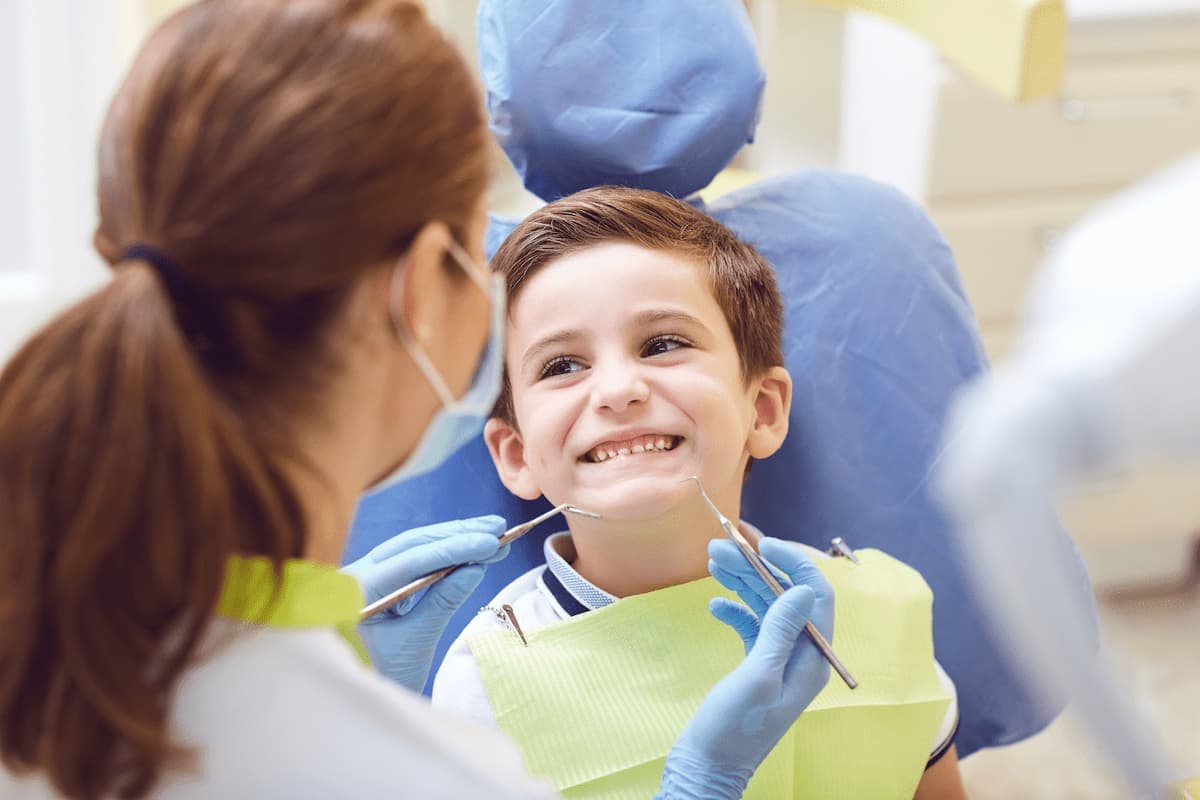
A dental check-up for a child is usually a calm and brief appointment. What happens may vary according to the child's age, any existing dental history, and any concerns raised by the parent or child. In general, a dental professional may:
- Greet the child and help them feel comfortable in the chair
- Gently examine the teeth and gums, looking at the condition of any baby teeth and, in older children, how permanent teeth are developing
- Check for any early signs of decay or changes to the gums
- Discuss the child's oral hygiene routine, diet, and any habits that may affect dental health
- Offer preventive treatments such as fluoride varnish, where clinically appropriate
- Answer questions from the parent or carer
- Discuss the recommended interval before the next visit
The check-up is also a valuable opportunity for parents to ask questions — about brushing technique, toothpaste, diet, teething, dental development, or any concerns they have noticed at home.
When Might a Child Need a Dental X-Ray?
Dental X-rays are not automatically required for every child, and the decision about whether one is appropriate is made by the dental professional based on individual clinical circumstances.
Factors that may influence whether an X-ray is considered include:
- The child's dental history and any previous dental problems
- Clinical findings during the examination
- The child's age and stage of dental development
- Individual risk factors for decay or developmental concerns
- Whether the dental professional requires additional information that cannot be obtained from a visual examination alone
Where an X-ray is considered, the dental professional should assess whether the expected diagnostic benefit is appropriate, taking into account the minimal but real nature of any radiation exposure. Dental X-rays typically use very low doses of radiation, but they are not undertaken without a clinical reason.
If you have questions about whether your child needs a dental X-ray, it is entirely reasonable to ask the dental team to explain their thinking.
Signs Your Child May Need Dental Advice
Most dental concerns in children are best identified through regular professional check-ups. However, there are situations where a parent or carer should seek dental advice without waiting for a routine appointment.
These may include:
- Persistent toothache or tooth sensitivity that does not resolve
- Visible holes, dark spots or damage on a tooth
- Swelling of the face, jaw or gum
- Bleeding from the gums that occurs regularly or without obvious cause (see this bleeding-gums support guide for interim home-care pointers)
- A knocked-out or damaged tooth following an accident or trauma
- Tooth pain or discomfort that appears to be affecting eating, sleeping or daily life
- Any changes to the gums or mouth that are unusual or concerning
If a child experiences dental trauma — such as a tooth being knocked out — this may require prompt professional attention. In this situation, contact a dental practice or, if necessary, an appropriate urgent care service without delay.
Where same-day support is needed, these urgent dental care options explain what to do next.
Do not rely on this or any other online resource to assess an individual dental concern. A professional examination is the only way to properly evaluate a child's specific situation.
Helping Children Feel Comfortable About Dental Visits
Dental anxiety is common in both children and adults, and it is entirely understandable. For some children, unfamiliar environments and new experiences can feel daunting. There are several approaches that may help, though no single method will work for every child.
- Use calm, positive language when talking about dental visits. Avoiding frightening descriptions or dramatic stories about dental experiences — including well-intentioned ones — can help.
- Be matter-of-fact. Treating the dental appointment as a routine part of life, similar to other health appointments, can help normalise it for children.
- Prepare but do not over-prepare. Explaining to a child that the dentist will look at their teeth and count them can be helpful. Very detailed descriptions of procedures can sometimes increase rather than reduce anxiety.
- Allow children to ask questions. Dental teams experienced in working with children are usually happy to explain what they are doing and to go at a pace that suits the child.
- Praise and acknowledge. Recognising a child's bravery and co-operation after a visit — whatever that looked like — can support a positive association over time.
If a child experiences significant dental anxiety that makes attendance very difficult, it may be worth speaking with the dental team before the appointment so that appropriate adjustments can be considered.
A Practical Daily Child Dental Health Checklist
Use this as a flexible guide rather than a strict prescription. Every child's routine will look a little different.
- Brush teeth twice a day — once before bed and once at another time
- Use fluoride toothpaste appropriate to the child's age (check current NHS or dental guidance)
- Help or supervise younger children with brushing
- Spit, don't rinse, after brushing
- Limit sugary snacks and drinks to mealtimes where possible
- Offer water as the main drink between meals
- Attend dental check-ups at intervals recommended by the dental team
- Contact the dental practice if you notice pain, swelling or visible damage
How Much Does a Child's Dental Check-Up Cost?
Dental charges and eligibility can vary depending on a number of factors, and the rules around NHS dental care for children can change over time. It would not be appropriate to state specific prices here, as these may not reflect current or practice-specific arrangements.
In England, children are generally entitled to free NHS dental treatment, though it is advisable to confirm eligibility and current arrangements directly with a dental practice or through the NHS website. Private dental practices set their own fee structures, which can vary.
If cost is a concern, it is worth contacting dental practices directly to ask about NHS availability or any relevant payment arrangements, rather than assuming that a particular cost applies universally.
Frequently Asked Questions About Child Dental Health
Why is child dental health important?
Children's oral health affects their comfort, their ability to eat and speak, and their overall wellbeing. Dental problems in childhood — including tooth decay — can cause pain and disrupt daily life. Establishing good habits early can also support better long-term oral health as children grow into adults.
How can I improve my child's oral hygiene?
Consistent twice-daily brushing with an age-appropriate fluoride toothpaste, combined with a balanced diet that limits frequent sugar exposure, forms the foundation of good children's oral hygiene. Supervising younger children with brushing and attending regular dental check-ups are also important components.
When should a child first see a dentist?
UK guidance generally encourages a first dental visit when the first tooth appears, or around a child's first birthday. Early visits help establish a positive association with dental care and allow the dental team to provide preventive advice tailored to the child's age.
How often should children see a dentist?
The appropriate interval between check-ups can vary depending on a child's individual oral health, risk factors, and clinical findings. A dental professional will typically recommend an appropriate review interval based on the child's specific circumstances, rather than a fixed universal schedule.
What happens at a child's dental appointment?
A dental check-up for a child usually involves a gentle examination of the teeth and gums, a discussion about oral hygiene and diet, and advice on preventive care. It is also an opportunity for parents and children to ask questions. The appointment is generally brief and calm.
Does every child need a dental X-ray?
No. Dental X-rays are not automatically required for every child. Whether an X-ray is appropriate depends on the child's dental history, clinical findings, age, and individual risk factors. The dental professional will decide whether the diagnostic benefit justifies the exposure in each specific case.
How much does a child's dental check-up cost?
Dental charges can vary depending on whether the appointment is NHS or private, and on current eligibility rules. In England, children are generally eligible for free NHS dental treatment, but it is advisable to check current arrangements with the dental practice or the NHS website directly.
What should I do if my child has toothache?
Contact a dental practice to arrange an assessment. Persistent toothache, swelling, or discomfort affecting eating or sleeping should not be left unaddressed. If you are unsure whether the situation is urgent, call a dental practice for guidance.
How can I help my child feel less anxious about dental visits?
Using calm, positive language, treating dental visits as a routine part of life, and allowing children to ask questions can all help. If anxiety is significant, speaking with the dental team in advance so they can make appropriate adjustments may be beneficial. Dental teams who work regularly with children are generally well-practised in helping young patients feel comfortable.
What is fluoride and why does it matter for children's teeth?
Fluoride is a naturally occurring mineral that helps to strengthen tooth enamel and makes it more resistant to acid attack from bacteria in the mouth. Using a fluoride toothpaste appropriate to a child's age is an important part of an effective oral hygiene routine. Guidance on the appropriate fluoride concentration for different ages is available from the NHS and dental professionals.
Looking After Your Child's Teeth and Gums: A Final Word
Child dental health is not about perfection — it is about building consistent, kind, and practical habits that support a child's comfort and wellbeing throughout childhood and beyond. The most important things parents and carers can do are often the simplest: regular brushing with an appropriate fluoride toothpaste, a balanced approach to diet, and ensuring children have access to professional dental care.
If you have any concerns about your child's teeth or gums, or if you would like personalised guidance on their oral health routine, speaking with a dental professional is always the most reliable next step. A dental team can offer advice tailored specifically to your child — something that no article, however thorough, can provide.
At Wimpole Street MD, we are happy to support families who are looking for caring, thoughtful dental care for their children. If you have a question or would like to arrange an assessment for your child, please do not hesitate to get in touch. Any treatment recommendations are made after an individual clinical assessment, and fees or NHS eligibility depend on your circumstances.
Dental Disclaimer
This article is for general educational information only. It does not provide diagnosis or personalised clinical advice. Treatment suitability varies and should be confirmed by a qualified dental professional. If you are concerned about your child’s teeth or gums, seek professional assessment.
Written: 14 September 2026 Next Review: 14 September 2027
Ready to Book an Appointment?
Our team is here to help you with all your dental and medical needs.








